
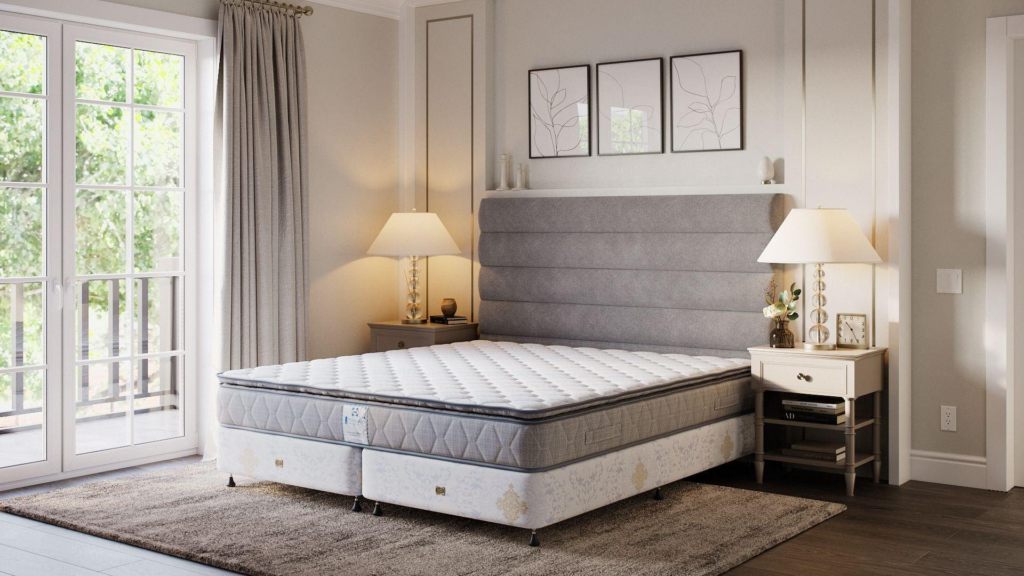
A mattress that does not suit your bed frame will wear out faster, feel less comfortable, and in some cases void the mattress warranty entirely. Most people spend a lot of time choosing how a mattress feels, but far less time checking whether it will actually work with the frame they have. This guide answers both questions clearly so you can make a decision you will be happy with for years.
Does the Type of Bed Frame Affect Which Mattress You Can Use?
Yes, and this is the part most buyers overlook. Different frame types require different mattress specifications. A platform frame with slats needs slats spaced no more than 3 inches apart to properly support a foam or hybrid mattress. If the gap between slats is wider than that, the mattress will sag through the gaps over time, and the warranty may be voided.
A basic metal frame without a solid surface requires a box spring or foundation underneath the mattress. Placing a memory foam mattress directly on a metal frame with wide cross supports is one of the most common mistakes Canadian buyers make, and it shortens the life of the mattress significantly. An adjustable base requires a specific type of mattress to work correctly. Memory foam, latex, and most hybrid mattresses flex with an adjustable base. Traditional innerspring mattresses with continuous coils do not. Explore the mattresses collection at Accents at Home to find options in all standard Canadian sizes.
How to Choose a Mattress Based on Sleep Position
How to choose a mattress becomes more straightforward once you know your primary sleep position. Side sleepers need a medium to medium-soft mattress that cushions the shoulders and hips and prevents pressure buildup at those points. Back sleepers do best with a medium-firm surface that keeps the spine in a neutral alignment without letting the lower back sink. Stomach sleepers need a firm mattress that prevents the hips from dropping below the level of the shoulders. A mattress that is too soft for a stomach sleeper puts significant strain on the lower back over time. Combination sleepers who move between positions during the night benefit most from a medium-feel hybrid that balances support and pressure relief across different body positions.
The beds collection at Accents at Home includes a range of bed frame styles including platform, upholstered, and wood frame options, each of which has its own mattress compatibility requirements worth checking before you choose.
How to Pick a Mattress by Type
How to pick a mattress by material is one of the most practical ways to narrow down your options. Memory foam conforms closely to the body and excels at motion isolation, which makes it a good choice for couples where one partner moves more during sleep. The main drawback is heat retention, which can be an issue in warmer Canadian summers unless the foam includes cooling gel layers or a breathable cover. Latex mattresses are responsive and naturally cooling. They have a slight bounce that memory foam lacks and are a strong option for hot sleepers or anyone with sensitivities to synthetic materials. Hybrid mattresses combine foam comfort layers with a coil support system.
They provide good airflow through the coil layer, reduce motion transfer better than traditional innerspring models, and work well for couples with different firmness preferences. Innerspring mattresses are the most breathable option and the most affordable. They work well for back and stomach sleepers who prefer a firmer surface and do not need motion isolation.
What Size Mattress Fits Your Bed Frame?
The mattress size must match the interior dimensions of the bed frame. A queen mattress is 60 inches wide by 80 inches long and is the most popular size for Canadian bedrooms because it fits most rooms while providing enough surface area for two adults. A king mattress is 76 inches wide by 80 inches long and suits larger master bedrooms. A double or full mattress at 54 by 75 inches is a good fit for single sleepers who want more room than a twin provides. Always check the frame’s inner dimension, not just the listed mattress size it fits. Some frames, particularly upholstered or sleigh bed styles, add several centimetres to the outer footprint which affects how much clearance you have around the bed in the room.
What Else Should You Check Before Buying?
Mattress height matters more than most people expect. A thicker mattress on a low-profile platform frame can result in a sleeping surface that is too high or too low for comfortable getting in and out of bed. The combined height of the frame and mattress should put the sleeping surface at roughly 25 inches from the floor for most adults. Check the mattress warranty terms before purchasing. Most quality mattresses require a specific type of foundation to keep the warranty valid. Using the wrong frame or skipping a centre support beam on a larger queen or king mattress can void coverage. If you are replacing your frame at the same time as your mattress, doing both together gives you the best opportunity to get the combination right from the start. Visit Accents at Home to find bed frames and mattresses that are designed to work well together in real Canadian bedrooms.