

In a luxury kitchen, the aesthetic serenity is equally important as the kitchen’s power. This is the main reason chefs’ pantries have become a distinct feature of high-end houses.
Such extra spaces allow for heavy-duty cooking, baking, and staging out of sight, keeping the main kitchen’s elegance while also fulfilling professional-level functionality. A chef’s pantry that is carefully designed combines spatial efficiency, clever zoning, and tough design.
Appliance Selection and Smart Space Planning
The foundation of any chef’s pantry is appliance strategy. This is not a space for redundancy, but for precision. Appliances may earn their footprint by handling tasks that would otherwise clutter or disrupt the main kitchen.
This is where compact countertop convection ovens become especially valuable. They offer powerful, even heat circulation in a smaller form, making them ideal for baking, reheating, proofing, or secondary cooking zones without taking up too much space. Chefs consider these ovens their dependable and untiring helpers, even though they are quite discreet visually.
To choose the right appliances, consider noise levels and heat output.
Defining Task Zones for Professional Flow
A chef’s pantry that feels intuitive to use is preferable. That begins with clearly defined task zones. Generally, kitchen layouts feature a prep area with plenty of counter space, a cooking or heating zone, a storage area for dry food and small appliances, and a staging section for plating or service.
It is very important to have proper clearances between zones. Counters can be placed at a distance that allows people to move easily, especially if many tasks are being done simultaneously. In smaller homes, linear zones usually do better than U-shaped layouts, as they keep circulation effective without making one feel closed in.
Lighting That Supports Precision Without Glare
Lighting in a chef’s pantry serves a different purpose than in a show kitchen. The main focus can be on the work’s visibility.
For accurate ingredient and doneness checks, it’s very helpful to have undercabinet lighting, built-in shelf lighting, and ceiling lights with a high color rendering index. Decorative lights that throw shadows or produce glare may be avoided. On the contrary, one may choose multi-level lighting that can be set according to the task. Dimmers are especially useful, allowing the space to shift from bright prep mode to softer cleanup lighting without distraction.
Durable Surfaces Designed for Heavy Use
Durability can be the primary focus for surfaces in a chef’s pantry, with artistic elements taking a backseat, though luxury materials can still have a place. Quartz, porcelain slabs, stainless steel, and sealed natural stone can withstand heat, stains, and the impact of frequent cleaning.
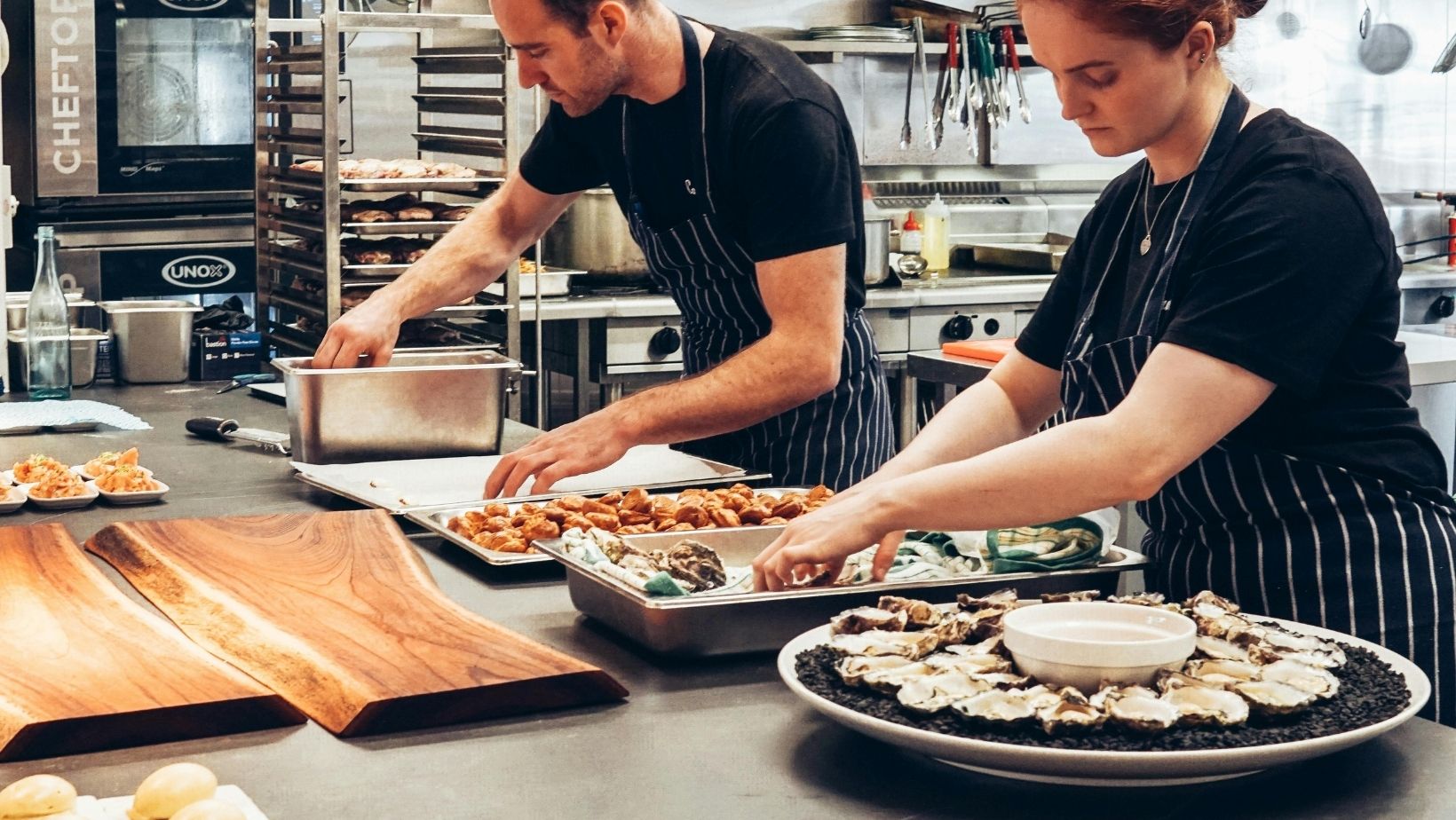
Wall coverings can go all the way behind cooking appliances, making it easier to clean with a simple wipe. Cupboard interiors with a smooth finish are quite handy, especially for storing oils, spices, and dry goods, as these items are prone to spilling.
Ventilation and Noise Control
Even compact chef pantries generate heat and sound. Properly venting your home removes unwanted heat, humidity, and odors before they manage to get into your main living areas.
Using dedicated exhaust fans or ducting them discreetly is a great way to prevent discomfort and protect surrounding building surfaces. Controlling noise is very important, too. Walls lined with insulation, doors made of solid wood, and cabinets that close softly all help make the kitchen environment much quieter. Deep culinary efforts can be carried out without disturbing the social spaces that are already disturbed.
A Space That Elevates the Entire Kitchen
A chef’s pantry designed with care can elevate the kitchen of a luxury home to a whole new level of performance. Not only does it preserve visual neatness, but it also enables advanced cooking and makes the everyday cooking experience in households more enjoyable.
When all these elements, like planned layout, trustworthy equipment, long-lasting finishing materials, and invisible architecture, are combined, then the chef’s pantry is turned into a silent champion of upscale kitchens, secretly enabling high standards without making any noise.