
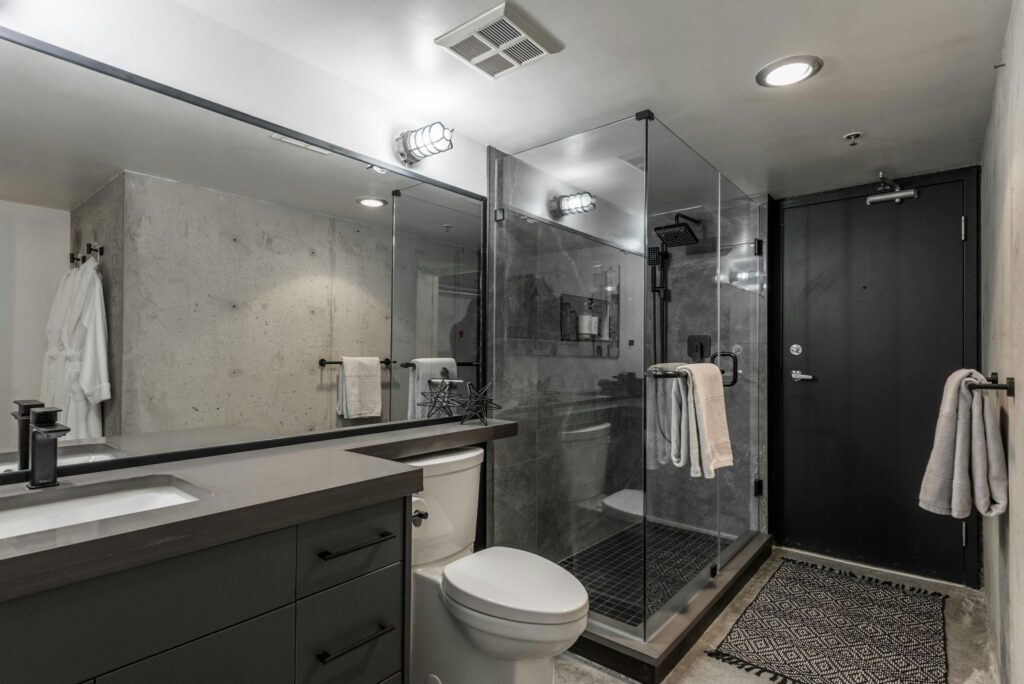
You start to notice it in newer homes, in carefully planned renovations, and across design features that feel more considered than before. Bathrooms are no longer confined to bright whites and soft neutrals. Instead, there’s a growing preference for deeper tones that bring a sense of contrast and intention into the space.
This shift isn’t about following a passing trend. It reflects a broader change in how interiors are being styled. Spaces are becoming more expressive, with greater attention given to materials, finishes, and how each element contributes to the overall feel of a room.
Bathrooms, in particular, are evolving into spaces that feel more curated. What was once purely functional is now approached with the same level of design thinking as living areas and kitchens. Darker features play a key role in that transition, offering a way to introduce depth without overwhelming the space.
Moving beyond safe, neutral design
For years, bathroom design followed a familiar formula. Light tiles, white cabinetry, and minimal contrast created a clean and predictable look. It worked well, especially in smaller spaces where brightness helped create a sense of openness.
But over time, that approach has started to feel repetitive. Many homeowners and designers are now looking for ways to move beyond that standard palette without compromising on simplicity.
Darker finishes offer that alternative. They bring a sense of structure to the room, creating focal points that feel deliberate rather than purely functional. Even a single darker element can change how the entire space is perceived, adding a layer of visual interest that lighter schemes often lack.
The appeal of depth and contrast
What sets darker features apart is the way they interact with light and surrounding materials. Instead of reflecting everything, they absorb light differently, creating subtle variations in tone throughout the day.
This adds a sense of depth that makes the space feel more layered. Surfaces appear more defined, and textures become easier to notice. Natural materials like stone, timber, and brushed metals tend to stand out more when placed alongside darker elements.
Contrast also plays a significant role. Pairing dark finishes with lighter walls or flooring creates a balanced look that feels intentional. It draws the eye without requiring additional decoration, allowing the design to remain clean while still feeling complete.
Where black vanities fit into modern spaces
Within this shift, black vanities have become one of the most recognisable features in contemporary bathroom design. They provide a strong visual anchor, grounding the space and giving it a clear focal point.
Their versatility is part of what makes them so widely used. In minimalist settings, they add contrast without disrupting the simplicity of the design. In more detailed interiors, they help tie together different materials and finishes, creating a sense of cohesion.
They also work well across a range of styles. Whether paired with soft, neutral tones or more textured elements, they adapt easily without feeling out of place. This flexibility makes them a practical choice for those looking to introduce darker features without committing to a fully dark palette.
Balancing dark features with the rest of the room
Using darker elements effectively comes down to balance. Without the right combination of lighting and surrounding materials, a space can feel heavier than intended. When done well, however, darker features enhance the overall design rather than dominate it.
Lighting plays an important role in this balance. Natural light helps soften darker finishes, while well-placed artificial lighting can highlight key areas and prevent shadows from becoming too prominent.
Material selection also influences the final result. Pairing darker cabinetry with lighter stone, warm timber, or subtle metallic accents creates contrast that feels cohesive. These combinations help maintain a sense of openness while still allowing darker elements to stand out.
Spacing and layout matter as well. Allowing enough room around darker features ensures they feel integrated rather than overwhelming, contributing to a more refined overall look.
Finding pieces that align with your design vision
Choosing the right elements is what brings the entire space together. It’s not just about introducing darker tones, but selecting pieces that align with the overall direction of the design.
Proportion, finish, and detailing all contribute to how a piece sits within the room. A well-chosen vanity, for example, can define the look of the space without requiring additional features to support it.
For those looking to refine their bathroom with a more considered approach, you can buy black vanities online and explore options that suit different layouts and design preferences. Having access to a range of styles makes it easier to find something that integrates naturally into your space.
A shift towards more expressive interiors
The move towards darker bathroom features reflects a broader shift in interior design. There is a growing preference for spaces that feel more personal and less uniform, where each element is chosen with intention.
Bathrooms are no longer treated as purely practical areas. They are being designed with the same attention to detail as the rest of the home, with a focus on how the space looks, feels, and functions together.
Darker finishes contribute to that change by adding contrast, depth, and a sense of structure. When used thoughtfully, they create spaces that feel both modern and lasting, without relying on overly decorative elements.