
Learning basic first aid and CPR is one of the most effective ways to protect your family and community. This guide explores how modern blended courses make certification easy for busy schedules, what practical skills you will actually master, and why immediate chest compressions are critical during sudden cardiac emergencies.
Imagine enjoying a family picnic when a relative suddenly collapses, grasping their chest. Your mind goes completely blank. It is a terrifying scenario, isn’t it? Most people freeze up because they simply don’t know what to do next. But getting certified through hands-on CPR training completely changes that dynamic. You go from a helpless bystander to someone who can confidently take charge. And frankly, those first few minutes before an ambulance arrives are absolutely critical for survival.
Why Do The First Few Minutes Matter So Much?
When a heart suddenly stops beating, the clock starts ticking instantly. Without a steady flow of oxygen, brain damage begins in as little as four minutes. An ambulance often takes eight to ten minutes to arrive, depending on traffic, weather, and location.
If someone steps in right away and starts chest compressions, they physically pump blood to the brain. This simple action can actually double or triple a person’s chance of making a full recovery. You are literally buying them time until professional help arrives.
What Will You Actually Practice in Class?
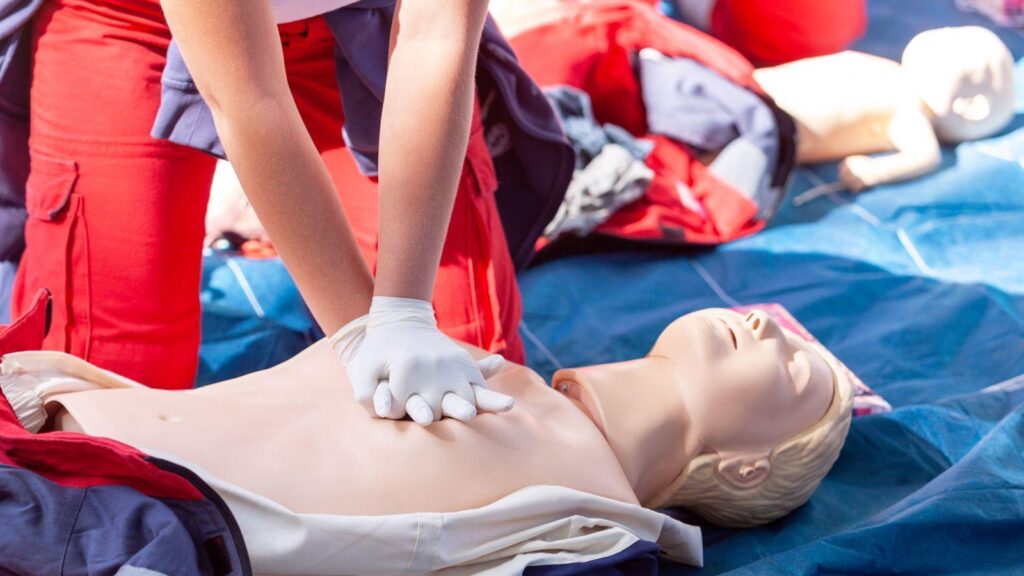
Forget about sitting through boring lectures filled with complex medical terms. Modern classes are completely focused on practical, repeatable skills. You will practice giving chest compressions on specialized mannequins until you find the right rhythm and depth.
You also get to practice using an Automated External Defibrillator (AED). People are usually nervous around AEDs, but they are incredibly smart devices that talk you out loud through every single step. By the time you finish your course, placing the pads and following the prompts will feel completely natural.
Are Blended Courses Really Faster?
Absolutely. We know it is hard to give up your entire weekend for a class. Blended learning allows you to knock out all the theory reading online while you relax on your couch.
After that, you only need to show up for a short in-person session to run through the physical skills with a certified instructor. It is a highly efficient way to get your WSIB-approved certification without draining your free time.
If you are looking for first aid training near Kennedy Road South, Queen Street East, or other areas close to our facility, then you may reach out to Coast2Coast First Aid/CPR – Brampton in that area.
What Are the Most Frequently Asked Questions About CPR?
1. Is CPR hard to learn? No, it is designed for everyday people. The steps are simple, and instructors focus heavily on building your muscle memory so you don’t have to overthink it during an actual emergency.
2. Can I get in legal trouble if I mess up? Good Samaritan laws generally protect bystanders who act in good faith during a medical emergency. Your certification gives you the foundational training to act safely and reasonably.
3. What if I am too tired to keep doing compressions? CPR is physically exhausting. If there is another person nearby, teach them how to do it quickly, or swap out every two minutes so you don’t lose the necessary depth and rhythm.
4. Are online-only certificates valid for work? Most employers and provincial safety boards require an in-person physical skills assessment. An online-only course usually will not meet standard WSIB workplace requirements.
5. Should I do CPR if the person is still breathing? No. If they are breathing normally, do not start chest compressions. Only start CPR if the person is completely unresponsive and not breathing (or only gasping occasionally).