
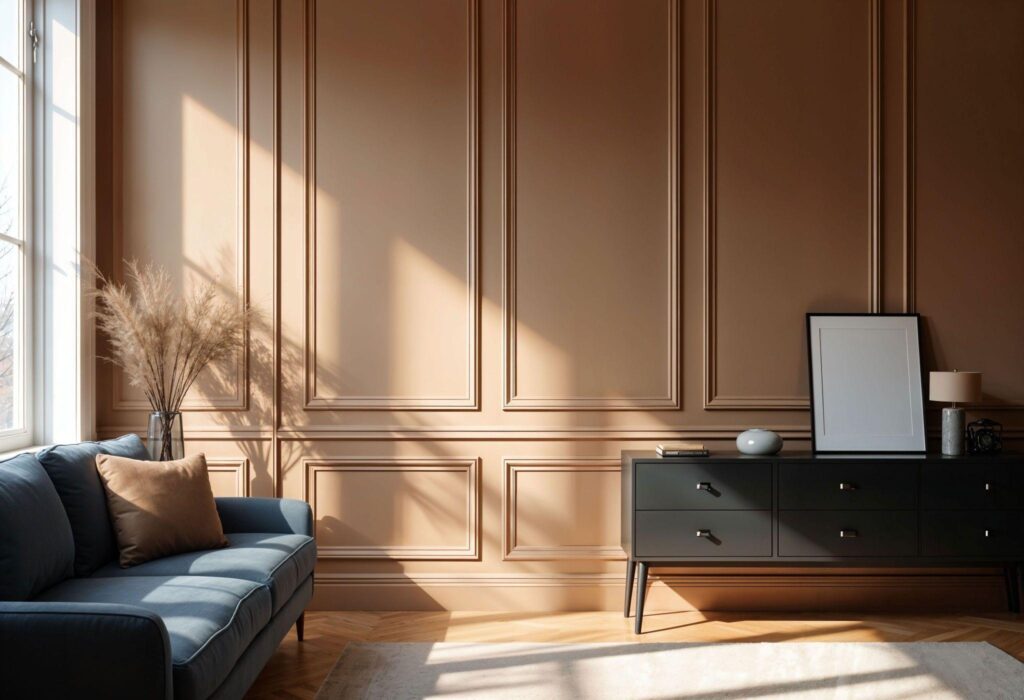
Wall paneling has never really left high-end design. It’s been a staple in the interior design and architecture community for years, but the way it’s being used in luxury homes today looks nothing like the paneling of decades past.
Paneled walls, wainscoting, and full-height millwork are showing up in primary suites, entryways, and studies where flat drywall once did the job. The shift says a lot about what luxury design values now: texture, permanence, and craftsmanship that paint alone can’t imitate.
But this evolution only works when it feels intentional. Done well, paneling reads as architectural and expensive. Get the proportions or profile wrong, and it starts to feel less like character and more like costume.
What Separates Luxury Paneling From Dated Paneling
The difference usually comes down to proportion more than material. Paneling that’s scaled to the room, sized correctly relative to ceiling height, window placement, and furniture, reads as architecture. Paneling that’s applied as an afterthought, with a stock height that doesn’t relate to anything else in the room, reads as decoration stapled onto a wall that wasn’t designed for it.
The rooms that photograph best tend to share a few traits: a rail height that lines up with a window sill or door casing, panel widths that repeat in a rhythm rather than getting awkwardly compressed at a corner, and a profile depth that matches the era or style of the rest of the house.
Keeping Custom Wall Paneling Looking Its Best
A fully paneled room is a meaningful investment, not just a decorative upgrade. Canada Mortgage and Housing Corporation’s guidance on maintaining a home frames a home as most owners’ single largest investment, with ongoing maintenance and quality upgrades as the way to protect and build on that value over time. Custom millwork fits squarely into that category.
Done well, custom wall paneling is a permanent architectural feature that adds to a home’s character and resale story for decades, not a trend piece that needs replacing the next time interior tastes shift.
Choosing Trim That Actually Suits the House
Matching a paneling profile to the architecture of a home is where a lot of projects struggle. A Georgian-inspired detail dropped into a modern build without any adjustment can feel more like a costume than a coherent design choice. Parks Canada’s Standards and Guidelines for the Conservation of Historic Places treats interior features like paneling and wainscoting as character-defining elements in their own right, reinforcing just how much these details contribute to the identity of a space.
That doesn’t mean every home needs historically accurate millwork. It means the profile should make sense for the architecture around it. Scale, depth, proportion, and the relationship between paneling, doors, windows, and other trim all matter.
That’s where having more than a handful of stock profiles becomes valuable. With a library of more than 10,000 custom moulding profiles, Toronto-based BRENLO gives designers, builders, and homeowners far more room to find—or create—a profile that actually suits their project. Instead of designing a wall around whatever trim happens to be available, the millwork can be selected around the architecture itself.
The Best Rooms for Wall Paneling
Not every room benefits equally from full millwork treatment. A few spaces tend to reward the investment more than others:
- Entryways and stair halls get the most visual traffic in a home, making them a strong place to invest in a detail that every visitor sees immediately.
- Primary suites and studies benefit from paneling’s quieter, more finished feel, especially in rooms meant to feel calm rather than active.
- Dining rooms have historically been one of the most common places for full paneling, partly because the room is used for longer, slower stretches of time where the detail actually gets noticed.
Designing With Wall Paneling the Right Way
Wall paneling’s staying power isn’t really about nostalgia. It’s a response to interiors that started to feel flat and interchangeable, and a preference for surfaces that show real craft rather than a coat of paint.
Getting it right takes more planning than a stock trim order, matching proportion to the room and profile to the home’s actual architecture, but that planning is exactly what separates a wall that reads as considered from one that reads as a trend someone will want to undo in five years.