
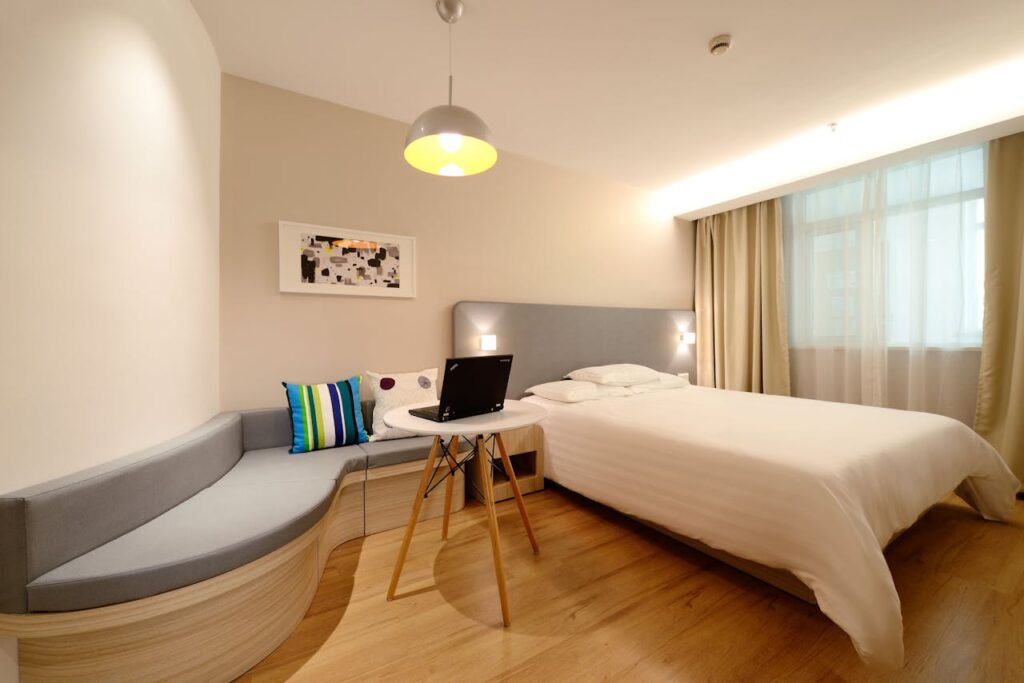
After a move, there is a brief window when the room exists as a blank canvas. The boxes are stacked, the mattress leans against a wall, and the room exists in a transitional state, awaiting thoughtful decisions. Most people rush through this part. They default to recreating whatever they had before, same layout, same arrangement, same curtains pulled from a moving box and hung back up without a second thought.
This presents a valuable opportunity. A new room, even if it’s roughly the same square footage as the old one, has different light. Different proportions. The windows face a different direction. The ceiling might be higher, the walls a slightly warmer tone. All of that changes what works.
So before you start unpacking the nightstands and figuring out where the dresser goes, pause briefly. Walk through the empty room a few times. Notice where the sunlight lands in the morning and what the natural focal point of the space is. That ten minutes of observation will save you from rearranging heavy furniture three times in a week.
Start With the Windows
It sounds counterintuitive. Most people want to deal with the bed, the big furniture, and the things that make the room feel livable. But the windows set the tone for everything else. How much light you let in, how private the room feels, and the visual weight of whatever’s hanging there: all of that shapes the mood before a single piece of furniture gets placed.
And here’s the thing about windows in a new space. What worked in your last bedroom probably won’t translate directly. Maybe the old place had north-facing windows that needed sheer panels to pull in as much light as possible. The new room might get aggressive afternoon sun that turns the space into a greenhouse by 3 p.m. The treatment has to match the room, not just your memory of what looked nice somewhere else.
Browsing window covering options before committing to a style is worth the time, because the range is wider than most people assume. Roman shades read completely differently than roller shades. Cellular blinds sit flush and minimal, while plantation shutters add architectural weight. The material, the opacity, and the mounting style: these details change the character of a room more than most wall art ever will. TheAmerican Society of Interior Designers has a resource library worth checking if you’re trying to understand how window treatments interact with broader design choices in residential spaces.
Protect What You’ve Already Invested In
None of the design planning matters much if your furniture arrives damaged. This is where attention to detail makes the difference.
A bedroom full of quality pieces, solid wood bed frames, upholstered headboards, and marble-topped nightstands, doesn’t respond well to careless handling. And the bed frame tends to take the worst of it because it’s heavy, awkward, and often gets disassembled and reassembled in a hurry. If you’re not sure how to properly move bed frame components without cracking joints or scratching finishes, it’s worth reading up before moving day. Bag all the hardware, label every rail, and wrap anything with a finished surface in furniture blankets before it goes on the truck.
For designer or custom pieces, professional movers who handle high-value items are a smart call. The Federal Motor Carrier Safety Administration offers a consumer checklist for verifying interstate movers, including how to check licensing and complaint records. A few minutes of research can save you from handing a $5,000 headboard to a crew that isn’t equipped for it.
Let the Room Tell You Where Things Go
Once you’ve got clean windows and undamaged furniture, the temptation is to just recreate your old layout. Fight that instinct.
Pull up any photos you have of the empty room from the showing or the walkthrough. Or just look at it now, before the bed goes in. Where’s the longest wall? Where’s the natural light strongest? Is there a view worth orienting toward, or a corner that feels dead and needs something to anchor it?
In many cases, positioning the bed toward the strongest visual element in the room creates a more balanced and intentional layout. If you default to putting the headboard against the wall closest to the door, you might be turning your back on the best part of the space.
Layering the Details
Bedding and soft furnishings are the last layer, and they’re where personal style comes through the loudest. But they also interact with the window treatments and the light levels you’ve already set.
A room with blackout cellular shades and warm artificial lighting calls for different textures than a room flooded with diffused natural light through linen panels. Dark, moody bedding in a bright room can look intentional and grounded. The same palette in a dark room can feel heavy. So think about the light you’ve designed around, then choose textiles that respond to it rather than fight it.

Throw pillows, a bench at the foot of the bed, and a rug that extends past the frame on both sides: these are the things that make a bedroom feel finished rather than functional. Don’t rush to fill every surface on day one. Live in the room for a couple of weeks. See what it actually needs once you’ve spent a few mornings waking up in it.
One Room, Done Well
A bedroom redesign after a move doesn’t need to be a full renovation. Most of the time, it’s about making better choices with the pieces you already own and being more intentional about the details you layer in.
Get the window treatments right, protect the furniture that matters, and let the room’s proportions guide placement instead of habit. The process itself is straightforward, but it requires patience to resist the urge to just throw everything into position and call it done.
The opportunity to shape a space intentionally is brief. Taking the time to do it thoughtfully pays off long after moving day.