
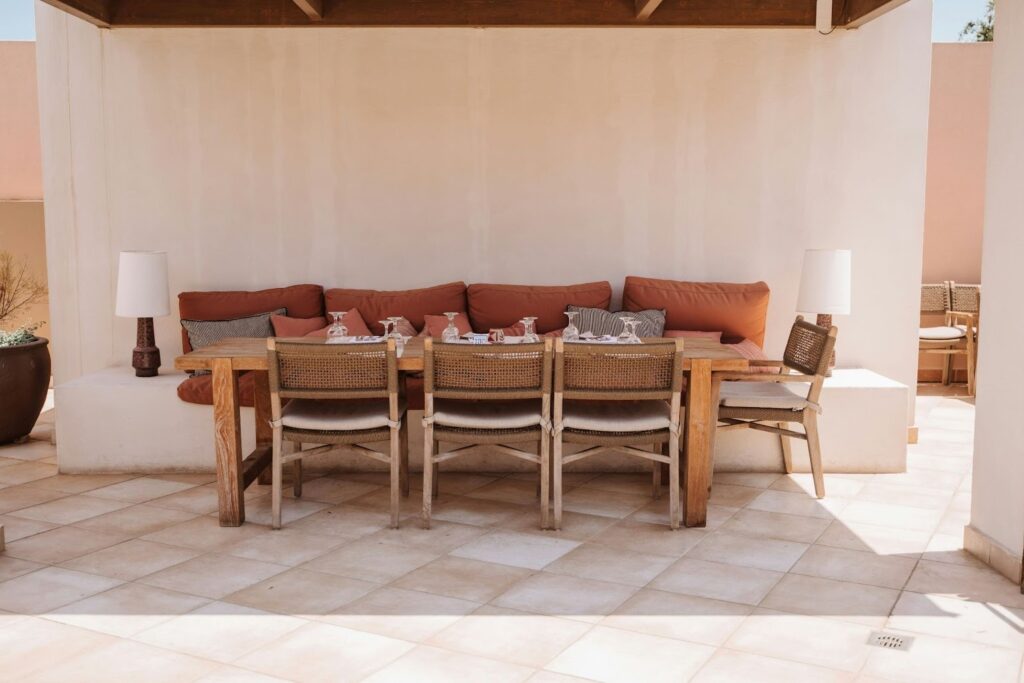
Outdoor spaces are no longer treated as an afterthought. They’re designed with the same level of care as interiors, with attention to layout, materials, and how everything works together.
Furniture is chosen to complement the home, finishes are considered, and the overall look is often just as refined as what sits inside. These spaces are used more often, and expected to hold their appearance over time.
The challenge is that outdoor environments don’t offer the same level of control. Exposure to sun, rain, and everyday use can quickly affect how everything looks and feels.
That’s where more thoughtful design choices come in, not just in how a space is styled, but in how it’s maintained.
The Rise of Outdoor Spaces as Extensions of the Home
Outdoor areas have taken on a new role in how homes are designed and used. They are no longer separate zones, but natural extensions of indoor living spaces.
You see this in the way layouts are planned. Seating areas mirror living rooms, dining settings are styled with the same intention as indoor tables, and materials are chosen to create a seamless transition between inside and out.
This approach brings a sense of continuity. The outdoor space feels connected, not secondary. It becomes somewhere you spend time, not just somewhere you pass through.
With that shift, expectations have changed. These areas are no longer expected to simply function. They are expected to look considered and remain that way.
The Challenge of Maintaining a Refined Look Outdoors
Maintaining that level of finish outdoors comes with its own set of challenges. Unlike interiors, these spaces are constantly exposed to the elements.
Sunlight can fade surfaces and alter colours over time. Rain and moisture can affect materials, while dust and debris settle quickly and change the overall appearance.
Even regular use contributes to wear. Movement, spills, and everyday activity all add up, making it harder to keep everything looking as intended.
Without some form of protection, it doesn’t take long for a carefully styled space to lose its edge. What once felt polished can start to look worn, even if the design itself hasn’t changed.
Design That Considers Longevity
A well-designed outdoor space isn’t only about how it looks on the day it’s finished. It’s also about how it holds up over time.
Materials, placement, and usage all play a part in that. Choosing pieces that can handle exposure while still maintaining their appearance is part of the process. It’s a balance between aesthetic and durability.
There’s also a growing awareness that maintenance should be considered from the beginning. Rather than reacting to wear, more people are thinking about how to prevent it.
This approach allows the space to age more gracefully. Instead of constant upkeep or replacement, the focus shifts to preserving what’s already been created.
Integrating Protection Without Compromising Style
Protection doesn’t have to disrupt the overall look of a space. When approached thoughtfully, it can sit in the background without taking away from the design.
In many outdoor settings, outdoor furniture covers are used as part of that approach. They offer a practical way to shield key pieces from exposure while keeping the overall setup intact.
The key is choosing options that align with the space rather than stand out from it. When they’re not in use, they’re barely noticeable, and when they are, they serve a clear purpose without detracting from the aesthetic.
By incorporating protection in a considered way, it becomes part of the design process rather than an afterthought.
The Balance Between Function and Visual Appeal
In outdoor design, function and appearance need to work together. A space might look refined at first glance, but if it’s difficult to maintain, that finish doesn’t last for long.
The most successful outdoor settings are the ones that feel effortless to use and easy to manage. Furniture is arranged with purpose, materials are chosen with care, and practical elements are considered from the beginning.
When these decisions are made well, they don’t take away from the visual appeal. If anything, they support it. A space that stays clean, structured, and consistent over time will always feel more polished than one that requires constant attention.
It’s this balance that allows outdoor areas to remain both functional and visually cohesive.
A More Considered Approach to Outdoor Living
There’s a growing shift towards thinking about outdoor spaces in a more complete way. It’s not just about how they look when first styled, but how they perform over time.
This means considering how each element contributes to the overall experience, from comfort and layout through to maintenance and longevity. Every detail plays a role in how the space is used and how it evolves.
When that approach is taken, outdoor living becomes more sustainable in the long term. The space holds its quality, requires less effort to maintain, and continues to feel aligned with the rest of the home.
It’s a quieter kind of design thinking, but one that makes a lasting difference.