
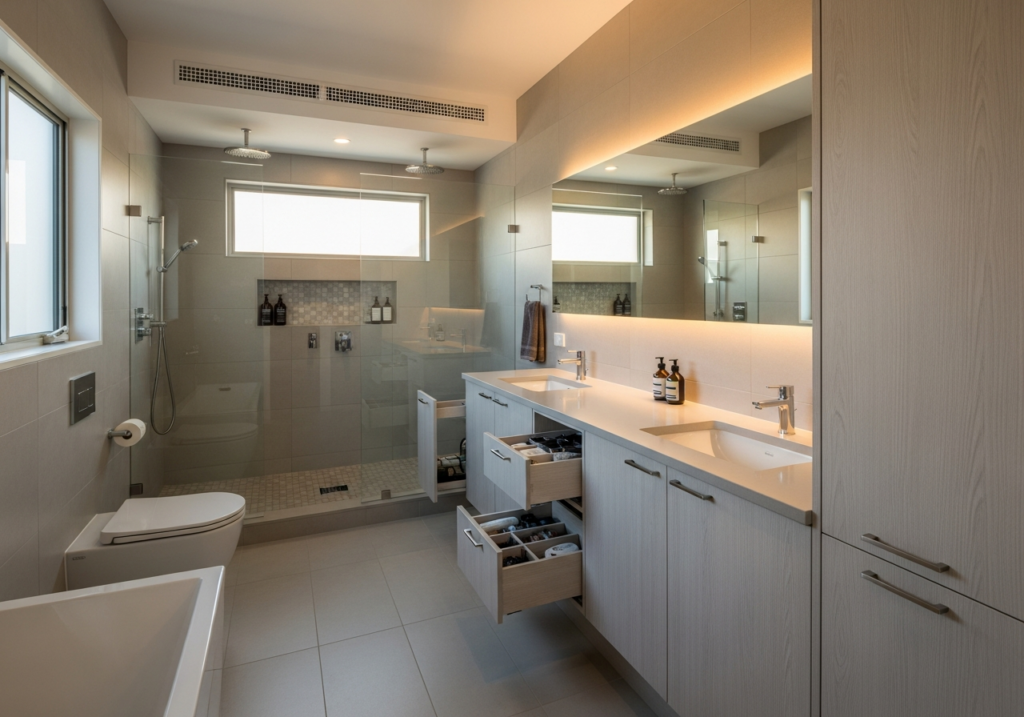
The bathroom is one of the most heavily used rooms in any home, yet it rarely gets the planning attention it deserves. A thoughtful approach to functional bathroom design can meaningfully improve daily comfort, cut down on frustration, and keep the space easier to maintain for years to come.
What Makes a Bathroom Work Well Every Day
Small details — from where you place storage and how you arrange fixtures to the right shower accessories — have a surprisingly large impact on how organized and practical the room feels in everyday use. This guide walks through the key decisions that shape a bathroom built around safety, easy maintenance, and long-term usability.
A bathroom that photographs beautifully doesn’t always hold up under real conditions. Daily usability depends on clear movement around fixtures, accessible storage, reliable drainage, surfaces that are genuinely easy to clean, and lighting that supports grooming without casting shadows or creating glare. What separates a frustrating bathroom from a smooth-running one usually isn’t the renovation budget — it’s the small calls made during the planning stage.
Start with the Space You Have
Before settling on finishes or fixtures, take an honest look at what you’re working with: room dimensions, plumbing locations, natural light, ventilation capacity, and traffic flow. These plumbing constraints and spatial realities should be driving decisions from the start. A small bathroom, for instance, can feel noticeably more usable when wall-mounted storage replaces floor-standing units and the shower layout is adjusted to open up floor space — all without moving a single wall. Space planning grounded in existing conditions consistently delivers better results than designing around an ideal that simply doesn’t fit the room.
Focus on Safety and Accessibility
Non-slip flooring, adequate lighting, and unobstructed entry paths all reduce the risk of accidents in a space that’s regularly wet. Accessible design benefits households of every age — not just older adults. The details matter more than people often expect: shower curb height, safe entry clearances, and proper clearances around fixtures all affect both safety and comfort in ways that add up over time. For structural or installation decisions, checking local building code requirements gives you a reliable baseline that goes well beyond general guidance.
Choose Materials That Hold Up Over Time
Water-resistant materials aren’t optional in a humid environment — they’re the foundation. When evaluating surfaces, it’s worth considering:
- Water and stain resistance
- Ease of cleaning with everyday products
- Durability under constant daily use
- Compatibility with your climate and ventilation setup
Porcelain tile, solid-surface countertops, and moisture-resistant wall panels tend to outperform visually similar alternatives over the long haul. Materials that are easier to clean also help prevent grime from taking hold in the first place, which meaningfully reduces upkeep effort over time.
Make Storage Part of the Plan
Organized storage cuts down on countertop clutter and makes daily routines run more smoothly. Vanity drawers, recessed shelving, medicine cabinets, and wall-mounted organizers all contribute to a tidier, more functional space. Storage should reflect how the room is actually used — accessible items that come out every day should be within easy reach, not tucked away. Well-chosen shower accessories can help keep bath and grooming items in order, especially when paired with built-in storage and a clutter-free layout. In shared bathrooms, giving each user clearly designated storage areas can dramatically reduce visual chaos and make the space work better for everyone.
Improve Lighting and Ventilation
Task lighting near the mirror, paired with ambient lighting for overall visibility, creates a bathroom that’s both functional and genuinely comfortable to spend time in. Even light distribution eliminates the shadows that make grooming tasks harder than they need to be. Ventilation is just as important: proper air exchange limits moisture buildup, discourages mildew growth, and slows surface deterioration. Moisture control through adequate exhaust ventilation is one of the most cost-effective investments you can make to extend the life of bathroom finishes and protect against structural damage over time.
Balance Style with Practical Maintenance
The most attractive bathroom is one its owner can realistically keep up with. Before committing to a finish, it’s worth asking:
Will it show water spots easily? Does it need special cleaning products? Will it hold up to daily use?
Low-maintenance, cleanable finishes often look better over time precisely because they resist wear and don’t demand constant attention. Simplicity in form and finish almost always supports daily upkeep better than visually complex alternatives that are harder to keep looking their best.
Common Planning Mistakes to Avoid
A handful of errors come up again and again in bathroom renovations: overcrowding the room with too many fixtures, letting appearance take priority over function, overlooking ventilation or lighting needs, choosing finishes that are difficult to clean, underestimating storage requirements, and placing frequently used items far from where they’re actually needed. For larger renovations that involve structural work or extensions, consulting resources from Rapid Building Inspections on construction stage inspections can also help homeowners understand when defects are most easily identified during the building process. Realistic planning catches these issues before installation because fixing them afterward is far more disruptive and expensive.
A Simple Framework for Better Bathroom Decisions
A step-by-step planning approach helps bring order to decisions before any purchases are made:
- Define who uses the room and how it gets used day to day
- Honestly identify where the current layout falls short
- Determine where safety improvements are genuinely needed
- Select durable, moisture-appropriate materials
- Build storage around real routines, not idealized ones
- Review lighting and ventilation before finalizing any design choices
This practical checklist turns design thinking into a manageable, actionable process rooted in real user needs rather than abstract ideals.
Building a Bathroom That Works Over Time
A well-designed bathroom is built on function, safety, and durability — not on trends or surface aesthetics alone. The choices that matter most are the ones that support everyday routines and make the space genuinely easier to use and maintain as the years go by. The most useful question you can ask of any bathroom design is a simple one: does this make daily life easier, or does it just create new problems to manage?
Key Takeaway: Good bathroom design is less about chasing trends and more about creating a space that works reliably, stays clean without excessive effort, and remains comfortable for everyone who uses it.