
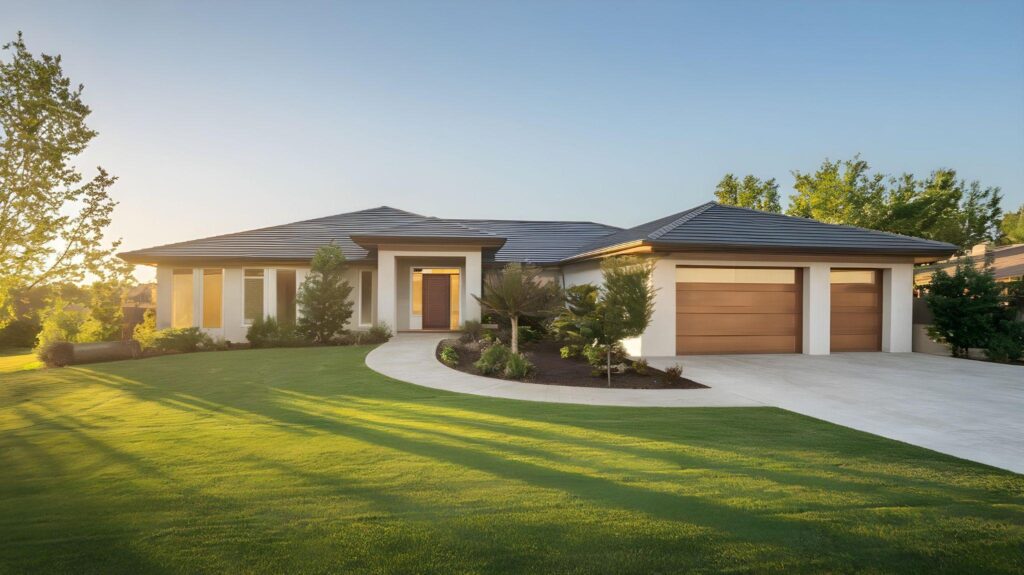
When people think about what makes a home feel luxurious, their minds usually go straight to the interior: a marble kitchen island, a dramatic staircase, floor-to-ceiling windows framing the right view. But before anyone steps through the front door, the roofline – the shape and design of your roof – has already done a lot of the talking.
Roof design is one of the most visually dominant elements of a home’s exterior, helping establish its proportions, architectural character, and overall presence from the street. On a luxury home especially, the pitch, shape, materials, and detailing of the roof can make the difference between an exterior that simply looks expensive and one that feels thoughtfully designed from top to bottom.
The roofline also creates the framework for everything below it, influencing how features like windows, stonework, siding, entrances, and landscaping come together. When those elements work in harmony, the result is the kind of cohesive curb appeal that gives a high-end home its unmistakable sense of quality.
So, what exactly makes a roof design feel luxurious, and how does it influence the way a home looks from the street?
Quick Summary: Roof Design for Entertaining Spaces
- The roofline is the largest uninterrupted surface on most exteriors, so it sets the architectural tone before anyone reaches the front door.
- Cooler, deeper tones and dimensional, architectural-grade shingles are the current go-to for a high-end look without the cost of natural slate or metal.
- A well-considered exterior measurably shapes perceived home value, not just first impressions.
- Material choice affects long-term performance as much as looks, so it’s worth weighing climate and durability alongside style.
- Installation quality, not just material, is what separates a roof that reads as premium from one that just reads as new.
Why Your Home’s Roofline Deserves the Same Attention as Its Interior
Interior designers obsess over sightlines, proportion, and how materials read together in a room. The same principles apply outside. A roofline that’s the wrong pitch, color, or texture for a home’s architecture can undercut even the most thoughtfully designed interior, because it’s the first thing anyone registers from the street.
A roofline that complements a home’s massing and window lines makes the entire exterior feel more intentional and more finished, without a single interior change.
Luxury Roof Colors and Shingle Materials
Exterior color trends have shifted noticeably over the past several years, and a few patterns show up again and again on high-endhomes:
- Cooler, deeper tones: Charcoal, matte black, and deep bronze are replacing the warm, dark browns that once dominated.
- Dimensional texture: Architectural-grade shingles create shadow lines that read as more substantial than flat, single-layer shingles.
- A realistic cost-to-look ratio: That texture without the price or maintenance demands of natural slate or metal is often the deciding factor for homeowners chasing a high-end aesthetic on a realistic budget.
Curb Appeal and Home Value Research
It’s tempting to treat exterior details like the roof as purely aesthetic, but the research backs up what design instinct already suggests. University of Georgia Cooperative Extension notes that a well-considered exterior meaningfully shapes how visitors and buyers perceive a home’s value before they’ve seen a single room inside. For homeowners investing heavily in interior design, an outdated or mismatched roofline is one of the few things that can undercut that investment before anyone steps through the door.
Choosing Roofing Materials for Durability, Not Just Looks
A roof also has to perform, not just photograph well. Material choice affects how a home handles snow load, temperature swings, and moisture over decades, not just how it looks on move-in day. Natural Resources Canada’s guidance on home energy efficiency is a useful starting point for homeowners weighing how roofing and attic ventilation affect a home’s comfort and performance over time, particularly in climates with significant seasonal swings.
For asphalt roofing, that means looking beyond colour alone and considering the quality and performance of the shingles themselves. Ontario contractor JN Roofing, for example, uses Owens Corning TruDefinition Duration shingles for its roofing projects, a product line designed to combine dimensional colour and texture with features intended for long-term roof performance.
The larger point for luxury homeowners is that durability and design don’t have to be competing priorities: the right material should complement the architecture while being suited to the conditions the roof will actually face.
Hiring a Roofing Contractor for a Premium Finish
Even the highest-quality roofing materials can fall short without careful installation. The details that often distinguish a polished, high-end roof include:
- Clean, straight lines along ridges and edges
- Consistent shingle reveal across the whole roofline
- Properly finished valleys, transitions, and flashing points
A qualified, shingle-focused installer will work directly with homeowners on style, color, and texture decisions to make sure the finished roofline actually supports the rest of the home’s design, rather than working against it.
The Roof Is Part of the Design, Not an Afterthought
The roof rarely gets the same design attention as a kitchen renovation or a primary suite refresh, but it’s doing more visual work than almost any other single element on a home’s exterior. Getting it right is one of the more overlooked ways to make a luxury home actually look like one, from the curb in, not just from the door in.