
Not long ago, most people only drove through Boston’s Seaport District on their way somewhere else. Warehouses, loading docks, and empty waterfront lots defined most of the landscape.
Fast forward to today, and this same shoreline is lined with luxury apartments, waterfront restaurants, and offices, all with harbor views.
The most interesting part is how designers decided to keep the rough edges of the old industrial waterfront and make them the heart of every new interior.
Industrial Design Roots
The Seaport District was originally built for work, not comfort, and all of the infrastructure was designed to feed into Boston’s busy shipping routes as well as the cruise port.
Rather than covering up these industrial bones, today’s interior designers have made them the stars of their spaces.
Exposed brick walls and massive steel beams now anchor living rooms where families gather for dinner. Warehouse-style windows that once illuminated loading docks now frame million-dollar harbor views.
This balance between rugged structures and refined detail is what defines the Seaport’s unique look.
The Softening Effects of Coastal Luxury
One of the biggest shifts in Seaport interiors comes from the harbor itself.
Water changes the way a space feels, and many designers have leaned into that.
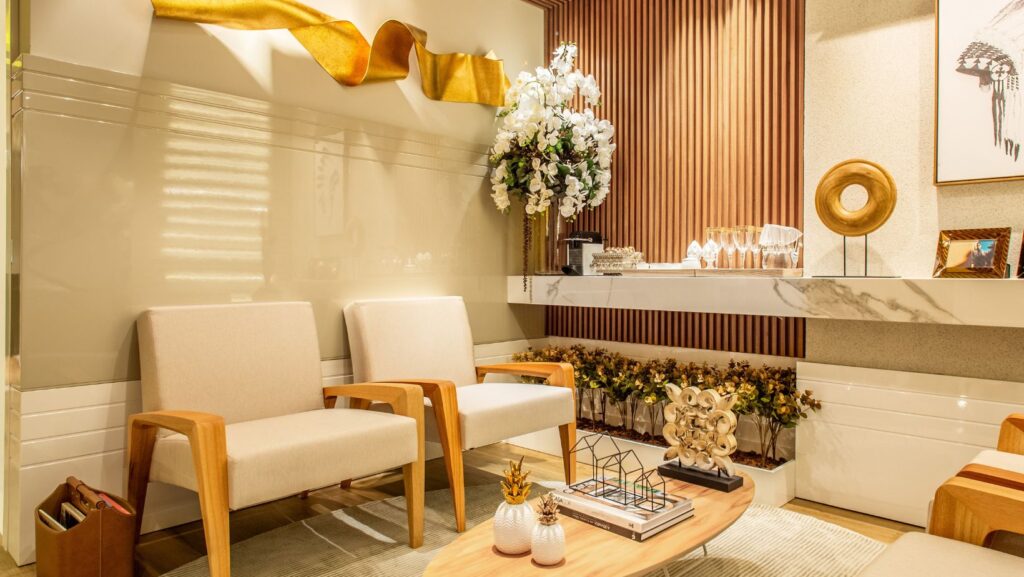
Heavy industrial shades have been replaced with pale woods, white oak floors, soft grays, and neutrals. Accents of navy, slate blue, and sea-glass green are now also a common occurrence in the spaces here.
Textures also do a lot of the heavy lifting. Linen sofas, wool throws, and leather chairs give spaces that once felt rigid and cold a lot more warmth.
The result is a style that feels relaxed, but still polished. Basically, the kind of place you’d want to come home to after a busy weekend in Boston.
Open-Plan Living and Glass Architecture
Space is treated as a luxury in Seaport, and many interiors reflect exactly that.
Most apartments and offices follow open-plan concepts, and floor-to-ceiling windows are a big part of how designers create the illusion of more space. It’s also a great way to use any natural light to its full advantage, plus you get to frame any harbor views.
Glass walls and partitions are another new trend because they offer a way to divide a space without making it feel too closed in.
Then there are the balconies and terraces, which are a major extension of most homes. When utilized correctly, a balcony or terrace can make it feel like the water is a part of the home.
A Touch of Tech
Smart technology is what keeps some of the most luxurious spaces functioning more smoothly.
Smart lighting systems, climate-control apps, and automated blinds have become standard in countless homes within this district. And what makes it feel really high-end is how subtle these additions are.

Wiring is hidden, screens are flush-mounted, and sound systems are woven into ceilings and walls rather than displayed publicly. The goal here is convenience without clutter.
Boutique Aesthetics as a Finishing Touch
Many Seaport apartments look more like boutique hotels in the best way possible, and the influence shows in the attention to both aesthetics and experience. Instead of simply furnishing rooms, designers think about how people will move through and use their spaces.
Feature lighting is used to set the mood instead of just brightening a room, while custom cabinetry is used to ensure the entire design of the space is more cohesive, yet functional.
There’s also been a big shift towards focus walls, sculptural decor, and textures, to give every space a unique mood and identity.
Where the Past Meets What’s Next
The Seaport District shows what can happen when a neighborhood grows without losing its character. Instead of hiding the history, designers build on it by blending strong industrial bones with softer finishes and a more relaxed way of living.