
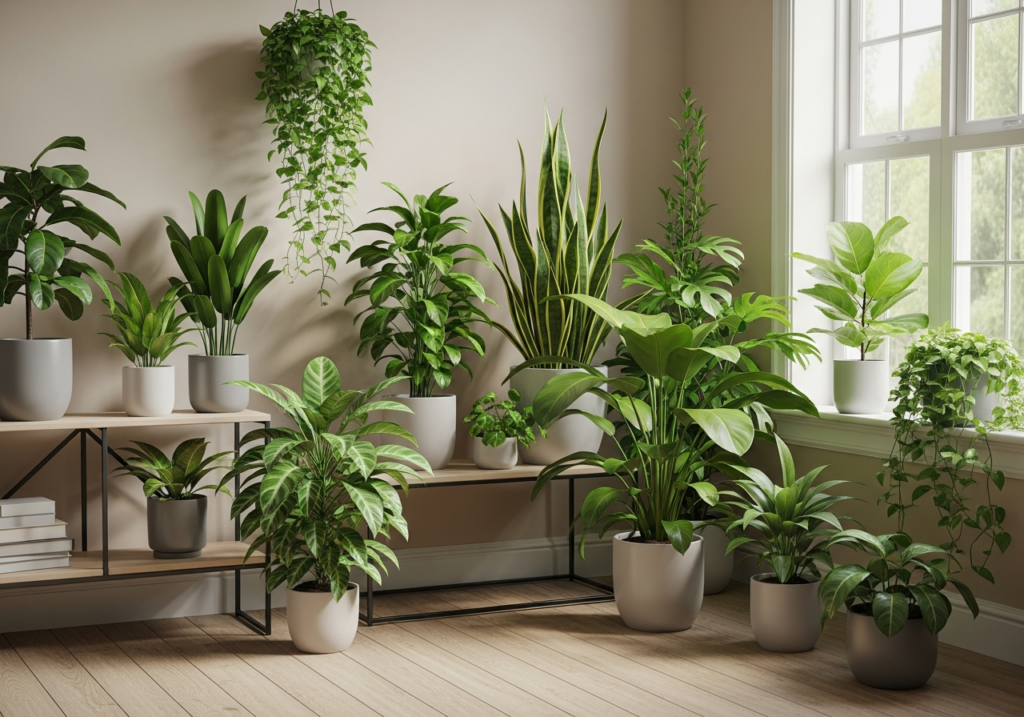
Many homeowners write off poorly lit rooms as simply incompatible with plants. North-facing windows, basement spaces, and interior rooms far from any natural light source can make indoor gardening feel like a losing battle. But that assumption overlooks a surprisingly rich group of plant species that have spent millennia evolving in exactly these conditions. With the right selection and a basic understanding of their needs, even the dimmest corner can support a genuinely thriving display.
Introduction
Understanding Low-Light Environments
This guide covers how to cultivate greenery in low-light environments, with particular attention to low maintenance low light plants that require minimal intervention while delivering real aesthetic and air-purifying benefits.
In practical terms, low light describes spaces that receive fewer than two to three hours of indirect sunlight per day—a step above full shade, where almost no natural light reaches at all. Room orientation matters considerably here: north-facing rooms tend to receive soft, consistent diffused light throughout the day, while south-facing spaces benefit from stronger, more sustained exposure. In exceptionally dim rooms, supplemental LED grow lights can fill the gap, though many shade-tolerant species adapt well without them.
What Makes Low-Light Plants Resilient
Low-light tolerance isn’t a limitation—it’s an evolutionary advantage. Plants native to forest floors and dense canopy environments have developed larger leaf surfaces to capture diffuse light more efficiently, as well as higher chlorophyll concentrations to make the most of every photon available. These same adaptations typically produce slower growth rates, which is genuinely useful indoors: plants stay manageable, need repotting less frequently, and rarely outgrow their allotted space. Crucially, low-light tolerance tends to go hand in hand with low-maintenance requirements, making these species a natural fit for busy households.
Popular Species for Dim Spaces
Several plants have earned their place as go-to choices for low-light conditions.
The snake plant (Sansevieria trifasciata) ranks among the most forgiving houseplants you can own. Its upright, sword-shaped leaves handle considerable neglect with ease, and it should only be watered once the soil has dried out completely—roughly every two to six weeks depending on the season. It also earned recognition in NASA’s Clean Air Study for its ability to filter common indoor air pollutants.
Pothos (Epipremnum aureum) produces cascading, heart-shaped leaves that adapt readily to a wide range of light and soil conditions. It looks equally at home in a hanging basket or trained along a shelf, and it propagates effortlessly from stem cuttings—making it one of the best starting points for beginners.
The peace lily (Spathiphyllum) brings elegant white blooms and glossy foliage to shaded spaces, and was also highlighted in NASA’s research for its air-purifying qualities. It prefers soil that stays consistently moist without ever becoming waterlogged.
The ZZ plant (Zamioculcas zamiifolia) stores water in its underground rhizomes, giving it exceptional drought tolerance. Its upright, architectural silhouette suits contemporary interiors particularly well.
Other reliable options include the cast iron plant, Chinese evergreen, prayer plant, dragon tree, and spider plant—each offering distinct textures and forms to suit varied design preferences.
Practical Care Essentials
The single most important rule for low-light plants is avoiding overwatering. Because these species grow slowly and experience less evaporation in dim conditions, their soil dries out far more gradually than it would for sun-loving plants. Always let the top layer of soil dry out between waterings, and make sure containers have proper drainage holes. A well-draining potting mix is equally important, since root rot—caused by consistently wet soil—is the most common reason these plants fail. Fertilize lightly during the growing season; these species have modest nutrient needs and can easily be harmed by excess feeding.
Designing with Low-Light Plants
Spaces that were once overlooked—hallways, basement corners, interior shelving—become genuine opportunities when approached with the right plants in mind. Layering varieties of different heights adds visual depth, while trailing species naturally soften hard architectural lines. Grouping plants with similar care requirements keeps maintenance straightforward and tends to produce cohesive, harmonious displays that contribute meaningfully to biophilic interiors.
Final Thoughts
Low-light environments aren’t obstacles to indoor gardening—they’re an invitation to explore a resilient and surprisingly diverse group of plants. Success comes down to a few core principles rather than specialized knowledge: match the plant to the available light, water conservatively, and let the plant’s natural pace guide your expectations. With the right species in place, even the dimmest room can become a genuinely green and living space.