
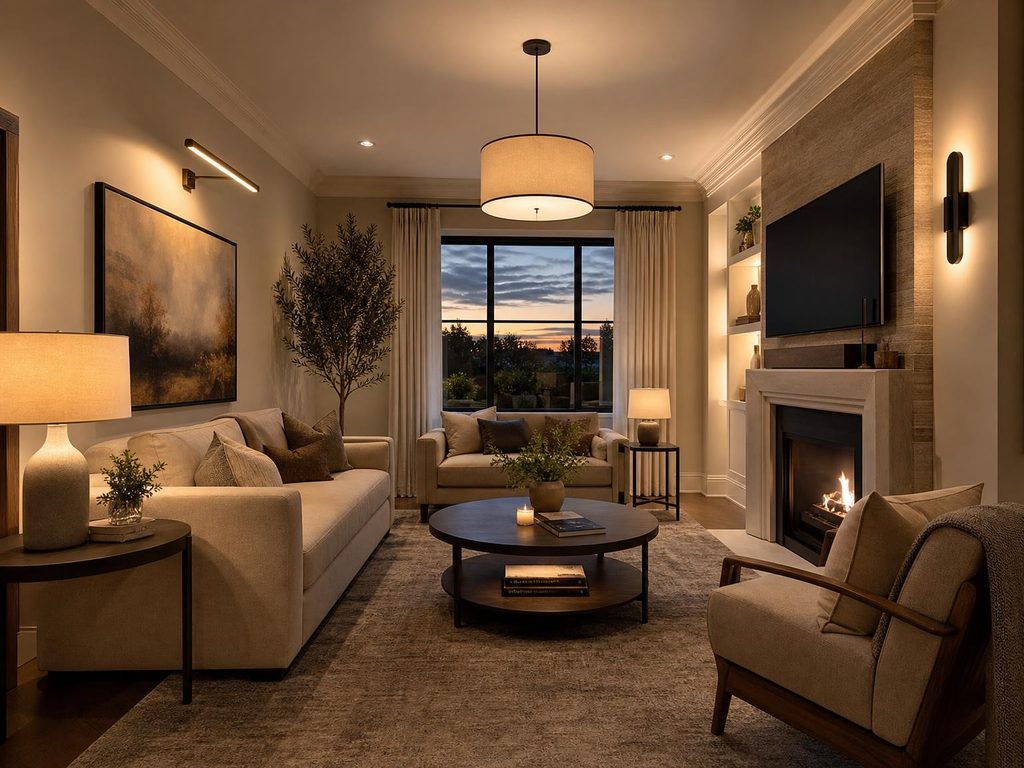
Good lighting often gets confused with simple brightness, but a well-designed room depends on far more than how many watts are overhead. A balanced lighting plan shapes comfort, function, and mood in ways that are easy to feel yet surprisingly hard to pin down.
Why Layered Lighting MattersMost homes benefit from a mix of ceiling fixtures, wall sconces, and table lamps, each doing its own job in how a space looks and works. This article lays out a practical, room-agnostic approach to lighting that you can apply throughout your home, no matter the style or square footage.
Ambient lighting supplies the general illumination that fills a room. Task lighting delivers focused light for specific activities like reading, cooking, or grooming. Accent lighting draws the eye to artwork, architectural details, or other focal points. A room usually performs best when at least two of these layers are present, and ideally all three work together.
Layering light improves visibility without harsh glare, softens shadows in work areas, and gives you flexibility as the day shifts from morning to evening. It also makes a space feel considered and comfortable rather than merely lit.
Start With the Room’s Primary Function
Before picking out fixtures, figure out what the room is mainly used for. A home office calls for different lighting than a bedroom does, and task requirements should guide your decisions on brightness and placement from the outset.
Natural light also shifts throughout the day, and rooms that serve multiple purposes often need more than one lighting zone. Think of a living room that needs relaxed evening ambiance one moment and focused light for reading the next—this kind of flexibility is essential in shared spaces.
Choose the Right Mix of Fixtures
Ceiling fixtures—flush mounts, pendants, or chandeliers—typically form the ambient base, but they rarely solve every lighting need on their own. Task lighting, whether it’s desk lamps, under-cabinet lights, or vanity fixtures, deserves as much thought in placement as in brightness. Accent lighting, such as picture lights or shelf lighting, works best when it supports a focal point rather than competing for attention.
How to Plan Lighting for Common Rooms
In living rooms, balance overhead light with side lighting and accent features, creating separate pools of light for conversation and reading. Bedrooms benefit from soft ambient light paired with focused task lighting near the bed. Kitchens need even, shadow-free task lighting over counters and prep zones for safety. Home offices require glare reduction and strong task lighting to ease eye strain. Hallways and other transitional spaces do well with low-profile ambient light and subtle accents that keep the home’s overall rhythm intact.
Practical Selection Factors to Consider
Brightness should match a room’s function—light that’s too intense can feel uncomfortable in spaces meant for relaxing. Color temperature matters as well: warmer light suits areas built for unwinding, while clearer, cooler light supports tasks that demand focus. Shade shape affects how light diffuses, too, with softer shades spreading it gently and open fixtures creating a more directional beam. Dimmers and separate controls for each layer add a level of flexibility that’s easy to underestimate until you have it.
Common Lighting Mistakes to Avoid
Relying on a single overhead source tends to produce flat, shadowed results. Ignoring scale and placement can throw off a room’s sense of balance. Too many competing accent points can distract rather than enhance. And a room that looks complete in daylight may feel oddly unbalanced after dark—so always take a second look once the sun goes down.
Simple Checklist for Building a Better Lighting Plan
- Identify the room’s main function and activities
- Determine which ambient, task, and accent layers are needed
- Choose fixtures that support those layers
- Test the space in daylight and evening conditions
- Adjust with dimmers, bulbs, or repositioning
Key Takeaway: A good lighting plan is layered, functional, and adaptable—combining general light, focused light, and mood-enhancing light.
Bringing It All Together
Effective lighting comes from layers, not a single fixture doing all the work. By matching light to function and comfort, any room can feel more balanced. Take a walk through your own home, one room at a time, and notice where a little more balance might make a difference.