
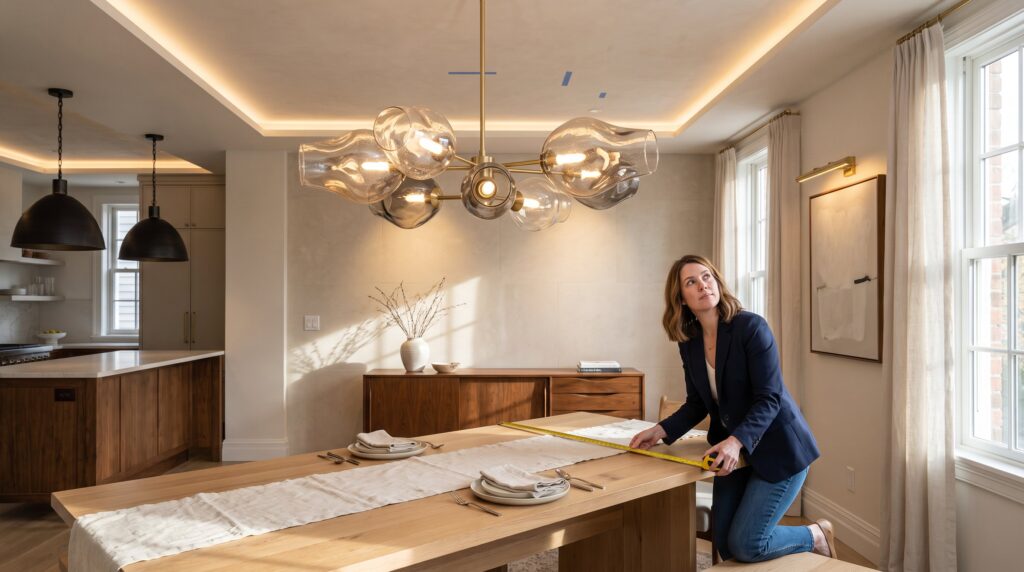
Luxury lighting ideas set the tone for a home and can change how spaces feel, function, and photograph. In 2026, refined fixtures, precise placement, and high-quality materials matter more than ever. This guide explains how to match luxury fixtures to room function, choose dramatic chandeliers and pendants, and layer ambient, task, and accent light for cohesive results. It aims to give practical rules, measured examples, and honest warnings so homeowners and designers can make confident choices without guessing.
Key Takeaways
- Luxury lighting ideas transform spaces by balancing approximately 50% ambient, 30% task, and 20% accent lighting for functionality and elegance.
- Select statement chandeliers or pendants scaled to room size, following the formula: room length plus width in feet equals fixture diameter in inches.
- Use high-quality materials like solid brass, blown glass, and hand-finished metals to ensure durability and timeless appeal in luxury lighting.
- Layer lighting types thoughtfully—soft ambient light combined with brighter task and accent lights creates depth and versatility.
- Accurate fixture placement and height, such as hanging chandeliers 30–36 inches above dining tables, are essential for visual harmony and comfort.
- Invest in LED-compatible fixtures with replaceable parts to enhance longevity and maintenance of luxury lighting installations.
How To Choose Luxury Lighting That Matches Your Space
Start with the fact: define the room’s function first, then select fixtures that deliver roughly 50% ambient, 30% task, and 20% accent light. That split produces balanced luxury lighting ideas that feel intentional rather than accidental.
Measure the room and list activities: dining, reading, cooking, entertaining. For each activity assign a light type (ambient, task, accent). Use indirect ceiling bounce or coves for ambient light to avoid glare: luxury guides recommend soft, ceiling‑bounced light over raw downlighting for a refined effect. When a room needs readable surfaces, kitchen counters or bedside reading, specify task fixtures that deliver 2–3× the ambient brightness in those zones.
Match style to architecture and furnishings. A modern limestone kitchen takes brushed brass or blackened metal: a neoclassical dining room pairs with crystal or blown glass. For durability and control, invest in high‑quality LEDs and compatible dimmers, this reduces maintenance and preserves color rendering over time.
Practical warning: don’t oversize fixtures to “fill” empty ceilings. Use the simple rule: (room length + width in feet) ≈ fixture diameter in inches. That yields a visually proportional result every time. For more on how the site covers related design topics, see the short guide about the blog’s mission in the site’s resource on blog navigation.
Statement Chandeliers And Pendant Lights For Dramatic Impact
Fact first: a single statement chandelier or pendant can define a room and serve as the anchor for all other luxury lighting ideas. Use large fixtures to mark primary zones, over the dining table, entry, or main seating group.
Choose scale by function. For a dining table, aim for a fixture about two‑thirds of the table diameter. A 60‑inch table calls for a fixture roughly 40 inches across. For overall room scale, remember the feet-to-inches rule: room length + width (ft) ≈ fixture diameter (in).
Material choices matter. Blown glass, crystal, and hand‑forged metal read as high end: blackened steel or bronze gives a grounded, modern feeling. Always confirm fixture weight and ceiling reinforcement: some sculptural chandeliers exceed 80–120 lb and require a reinforced canopy.
Placement matters: center over the table, entryway, or bed to create a natural focal point. Combine dimming and warm color temperatures (2700–3000K) to keep the mood soft and luxurious.
Real challenge: buyers often choose the prettiest piece online without checking mounting specs. Measure canopy depth, confirm transformer locations for low‑voltage fixtures, and ask for installation guidance if the fixture is heavier than 50 lb.
Placement And Scale Tips For Big Fixtures
Key insight: correct height and spacing turn an impressive fixture into a graceful one. Over dining tables the bottom of the chandelier should sit about 30–36 in (≈75–90 cm) above the tabletop. That range keeps sightlines clear while maintaining presence.
Over kitchen islands, hang pendants roughly 75–90 cm above the counter and space them about 60–75 cm (2–2.5 ft) apart. For circulation and entries, allow at least 7 ft (≈215 cm) from floor to the lowest part of the fixture so people don’t duck under it.
If a room has an unusually high ceiling, use a chain or rod to bring the fixture into human scale. Conversely, in a low ceiling space choose flatter, wider fixtures rather than tall, vertical designs.
Practical example: a 10 ft × 14 ft dining room yields a recommended fixture diameter near 24 in (10+14=24). If the table is 72 in, a 48 in chandelier (two‑thirds of table) will feel balanced and intentional.
Warning: lighting installers sometimes place fixtures by eye. Request measurements during layout and mark heights with painter’s tape so the final position matches design intent.
Materials, Finishes And Sculptural Forms Worth Investing In
Short answer: invest in materials that age well, have proven longevity, and support LED retrofits. Blown glass, lead‑free crystal, solid brass, bronze, and hand‑finished metals are reliable luxury choices.
Why it matters: a lacquered or plated finish can flake over a decade, while solid brass patinas attractively and can be polished. High‑quality blown glass shows subtle variations that read as artisanal: budget molded glass often looks flat under inspection.
Sculptural lighting, organic forms, layered diffusers, and asymmetrical metalwork, adds personality. Prioritize fixtures with replaceable parts (shades, diffusers, LED modules) so the piece can be serviced rather than discarded.
Budget note: spend on the finish and light source first. A $2,000 fixture with an integrated, replaceable LED module and solid brass canopy will likely outlast a $500 plated chandelier with non‑replaceable LEDs.
For related inspiration and topic coverage across the site, reference the article on room design ideas.
Layering Light: Combining Ambient, Task And Accent Lighting
Direct insight: layering ambient, task, and accent light delivers depth, flexibility, and a clearly luxurious result. Start with a soft ambient plan, add task zones where activities occur, and finish with accent beams to sculpt surfaces.
Ambient sources include indirect coves, recessed fixtures with baffles, and large floor lamps that wash ceilings. Task lighting should be brighter, 2–3× ambient on work surfaces, so under‑cabinet strips in kitchens and adjustable bedside lamps are essential. Accent lighting uses narrow beams or picture lights to highlight artwork, textured walls, or architectural niches at about 2–3× ambient brightness to create drama.
A precise mix: aim for roughly half the total lumen output from ambient sources, 30% from task fixtures, and 20% from accents. This mathematical approach makes design decisions measurable rather than subjective.
Installation tip: wire for future flexibility. Place switched circuits for ambient and task separately, and leave low-voltage runs to accent fixtures so the homeowner can add layers later with minimal disruption.
Design Examples: Living Room, Kitchen And Bedroom Setups
Core answer: tailored layer mixes for each room create functional luxury.
Living room: begin with recessed dimmable ambient or cove lighting. Add a statement chandelier over the coffee area and place reading lamps near seating. Use narrow‑beam accent spots (2–3× ambient) on artwork. This combination improves comfort and highlights key design pieces. For styling cues across rooms, consult the site’s practical essential tips.
Kitchen: combine ceiling ambient with island pendants hung 75–90 cm above the countertop and spaced 60–75 cm apart. Under‑cabinet LED strips provide focused task light for prep areas. Accent a textured backsplash with linear grazing lights to reveal material depth.
Bedroom: use soft ambient sources like shaded pendants or indirect cove lighting with color temps near 2700K. Position bedside task lamps at reading height and consider a centered chandelier kept at least 7 ft from the floor. For broader room inspiration, review the site’s piece on lighting upgrades for rentals.
Conclusion: Bringing Cohesive, Luxurious Lighting Into Your Home
Final insight: begin by defining room function, choose scaled statement fixtures, then assemble a layered scheme using durable materials and correct placement. Small measurement choices, height above table, spacing over an island, or lumen distribution, create a unified, luxurious result. Thoughtful planning, accurate measurements, and quality LEDs turn luxury lighting ideas into lasting interior value.