
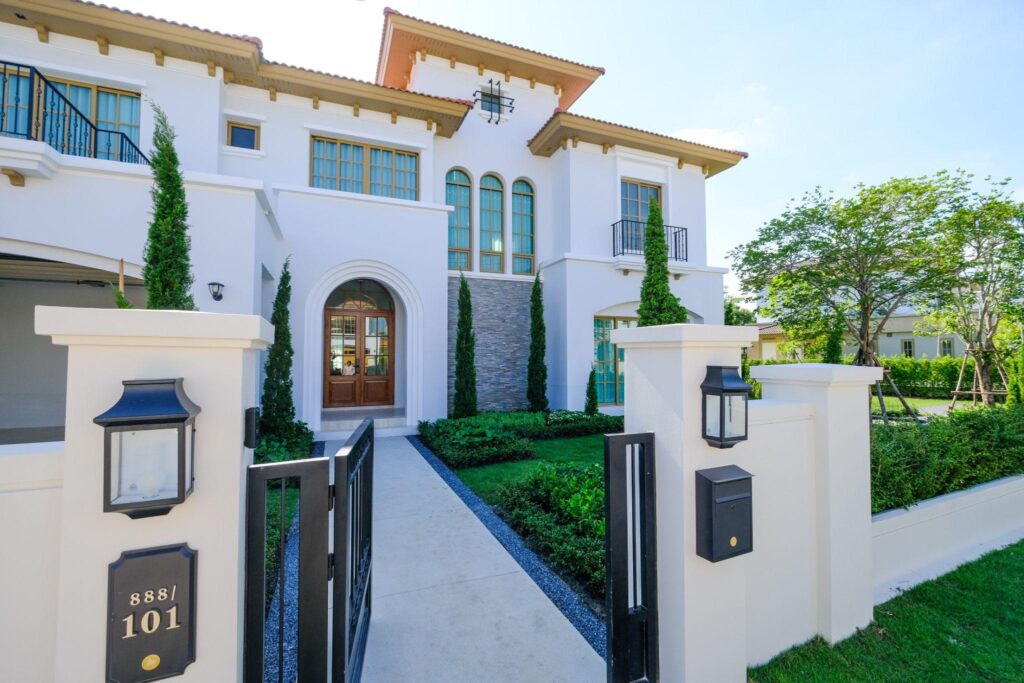
Thailand has always been a country where family ties run deep. Multi-generational households, where grandparents, parents, and children share a home or live in proximity, have been a part of Thai culture for generations. What is changing now is not the desire to live this way, but the expectation of what that living arrangement should look like.
Affluent Thai families are increasingly unwilling to sacrifice comfort, privacy, or lifestyle quality in order to keep the family together under one address. The question they are asking the property market is whether it can deliver a home that genuinely works for everyone without anyone feeling like they are living in someone else’s space.
The market is beginning to answer that question, and the communities doing so most convincingly are reshaping what multi-generational living means in the Thai luxury property context.
Why the Old Model No Longer Works
For much of Bangkok’s residential history, multi-generational living meant a large house in an established neighbourhood, chosen primarily for its size and its proximity to wherever the family needed to be. The assumption was that space solved the problem. If the house were big enough, everyone could find their corner.
That assumption has worn thin. Space alone does not address the need for genuine privacy within a shared home. It does not solve the problem of elderly parents navigating a community designed for younger residents. It does not give children a safe outdoor environment where they can move around independently. And it does nothing for the working-age members of the household who need professional infrastructure, alongside the family setting.
The families driving demand in Thailand’s luxury residential market today have lived through the limitations of the old model. They are looking for something more deliberately designed.
What Each Generation Needs to Thrive
The starting point for evaluating any community for multi-generational living is understanding that each generation brings a distinct set of requirements, and a development that serves one well may actively fail another.
For elderly residents, the priorities cluster around accessibility, wellness, and safety. Flat terrain and wide pathways matter far more than most developers acknowledge. A community that looks beautiful in an aerial photograph but requires navigating steps or long distances to reach shared facilities is not genuinely usable for someone with limited mobility. Wellness infrastructure calibrated for older users; a quiet onsen, a gentle walking trail, and a well-maintained pool are more valuable than a gym built around heavy equipment and high-intensity programming. And consistent, professional on-site management gives older residents and their adult children a level of reassurance that is difficult to put a price on.
For parents managing careers alongside family responsibilities, working-from-home infrastructure has moved from a nice-to-have to a baseline expectation. A co-working space within the community, strong connectivity, and a general environment conducive to focused work during the day are now standard items on the checklist. School access remains a hard constraint for many families; the driving time to a quality international school shapes the geography of the entire household.
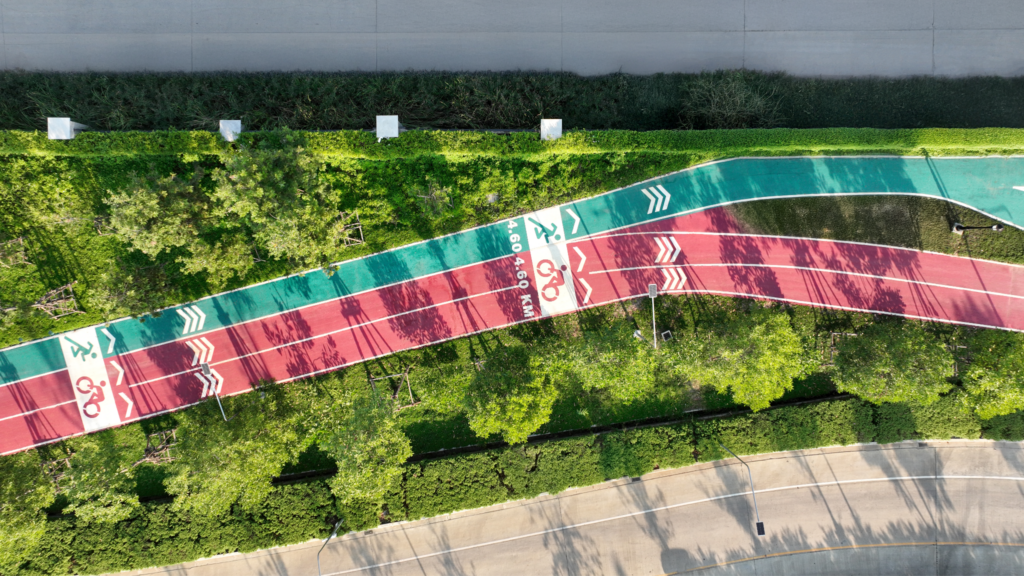
For children and teenagers, the single most valuable thing a community can offer is safe outdoor space with enough scale to be genuinely interesting. A token garden or an ornamental park does not serve a child who wants to cycle, run, or explore. A 10-kilometre trail does. A community with enough residential density to have peers nearby also matters. A small, exclusive estate may be beautiful, but it offers a child a very limited world.
The Design Details That Make a Difference
Beyond the headline amenities, a few specific design decisions tend to separate communities that genuinely work for multi-generational households from those that simply have large homes.
Zoning within the home is one. The best multi-generational properties include separate wings, private entrances, or clearly defined living areas that give each generation a sense of their own domain. An elderly couple who can come and go through their own entrance, with their own sitting room and garden access, experience the arrangement very differently from one where every movement takes them through the family’s main living space.
Ground-floor accessibility is another. For a development to genuinely serve elderly residents, single-level living options or ground-floor suites within larger homes need to be part of the product range, not an afterthought.
Shared space programming matters at the community level. A clubhouse, a walking trail, and a golf course are more valuable when they are actively maintained and consistently usable. The difference between a facility that exists on a brochure and one that functions well day-to-day comes down to management quality, and this is something worth investigating before committing to any community.
Reignwood Park: A Community Built Around Family Scale
For families running this evaluation seriously, Reignwood Park stands out as one of the more thoughtfully structured luxury communities near Bangkok for multi-generational living.
The development offers three distinct residential collections within a single master plan, each suited to a different household profile and budget. The ESTATE collection, 41 bespoke mansions with living areas from 1,500 square metres on plots of 1.5 to 3 rai, serves families who want maximum space and fully customised design. SERENO offers 309-square-metre homes with five bedrooms and an external maid’s room, a practical configuration that suits households with domestic help and frequent extended family visits. SONIA provides 180-square-metre homes for families who want to be part of the same community at a more accessible scale.
All three collections share the same amenity layer. The onsen is a natural fit for elderly residents. The 10-kilometre walking and cycling track gives children genuine outdoor range within safe, traffic-free grounds. The Par 3 golf course serves active residents across generations. The clubhouse gym and co-working space cater to working-age household members. Smart home systems and underground cable infrastructure across the development are the kind of baseline details that make daily life run more smoothly without drawing attention to themselves.
The result is a community where a grandparent, a parent working from home, and a school-age child can each have a daily routine that works for them, all within the same address.
Greener, Bigger, and Outside the City
For many Thai families, the move toward multi-generational living outside Bangkok is not just about finding the right community. It is about reclaiming a quality of life that the city centre can no longer provide for households of this size and complexity.
Bangkok’s inner districts do not have the land to support the kind of home a three-generation family genuinely needs. The houses that do exist at this scale in established neighbourhoods carry land costs that are difficult to justify when the same budget delivers far more outside the city. And the city’s traffic adds a daily friction to every trip that compounds over years of family life.
Moving to a well-designed luxury community outside Bangkok trades commute proximity for something most families in this situation value more: space, greenery, quiet, and an environment where children can grow up with room to move. For households where at least one primary earner works remotely or has a flexible schedule, this trade-off has become straightforward to make.
The families who find the right community and commit to it tend to stay. Multi-generational living, when the physical environment genuinely supports it, is one of the more fulfilling residential arrangements Thailand’s property market has to offer.