
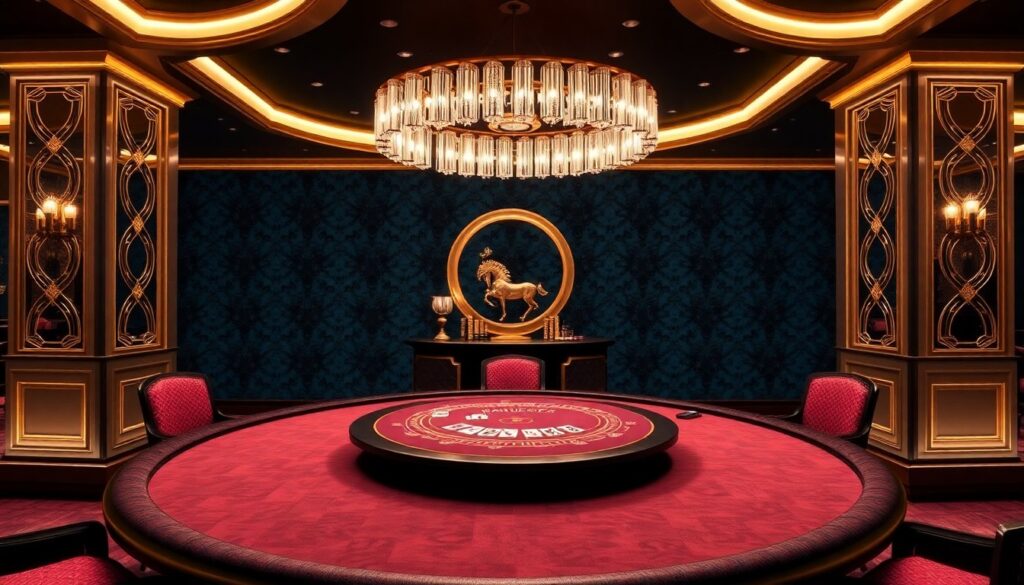
strategic challenges blackjack luxuryinteriors elegance baccarat appear at the same moment a venue opens its doors. Designers set rooms to impress. Managers set rules to protect games. Staff train to guide players. This article lists the key strategic challenges that arise when Blackjack and Baccarat meet luxury interiors and explains how venues manage those conflicts.
Key Takeaways
- Strategic challenges in blackjack and baccarat arise when balancing upscale luxury interiors with game visibility and security requirements.
- Effective table layout design integrates sightlines, lighting, and materials to support game strategy while enhancing elegance in venue interiors.
- Luxury venues must align operational protocols and regulatory compliance with guest privacy and seamless service to maintain game integrity.
- Staff training focuses on consistent rule enforcement, smooth service, and managing high-value players without compromising fairness or the guest experience.
- Technology like electronic shufflers and RFID chips enhances game efficiency and security when integrated discreetly within elegant settings.
- Continuous feedback, audits, and adherence to industry standards ensure that luxury casinos adapt and refine both design and operations to meet evolving strategic challenges.
Balancing Game Strategy With Upscale Design
Luxury venues face strategic challenges blackjack luxuryinteriors elegance baccarat every time they plan a table layout. Designers place tables to create visual drama. Managers place tables to meet sightlines and security. They test sightlines for dealer actions and player behavior. They set lighting to highlight chips and felt while avoiding glare that alters card visibility.
They choose materials that look expensive and that reduce sound. Hard surfaces amplify chips and voices. Soft surfaces mute noise but can hide small objects. They set carpet and panel choices to aid camera clarity for game surveillance. Security teams require camera angles that show both dealer hands and player actions. Designers adjust decorative elements so cameras keep clear fields of view.
They set table sizes to match game flow. Blackjack needs room for players to make choices and for dealers to collect and pay. Baccarat requires clear sightlines for two hands and for dealers to move efficiently. They place high-limit rooms with isolation for privacy while keeping access for security. Guests expect privacy and spectacle. Operators balance those demands with the need to enforce rules and to monitor for advantage play.
They train staff in both service and rule enforcement. A server brings a drink and then notes a dealer action. A manager watches for suspicious betting patterns while a host speaks with a VIP. They build simple protocols so staff act predictably. Those protocols reduce errors and keep games fair.
Venues that succeed make design choices that support game strategy. They let sightlines, lighting, and table scale work with play rather than against it. They test design choices with mock games and with staff feedback before opening.
Operational And Regulatory Hurdles In Elegant Gaming Spaces
Operators face strategic challenges blackjack luxuryinteriors elegance baccarat when they meet licensing and reporting rules. Regulators require clear records of large bets and payouts. They require video records of disputed hands. Operators set up systems to meet those rules without disturbing guests. They place discreet cameras and log stations behind the scenes.
They train staff on reporting thresholds and on interaction rules for high rollers. A dealer must handle a large wager the same way in a private salon as in a main room. Staff must follow bet acceptance rules and must complete required paperwork. They create audit trails that link electronic records to physical chips and to settled hands.
They set limits that fit both compliance and guest expectations. Regulators sometimes require lower limits or maximum table counts. Operators balance those constraints by creating tiered offerings. They place some tables inside closed salons and some in open rooms. They price access to private rooms with clear policies.
They plan for security incidents and for license inspections. They schedule audits and they run mock inspections. Security teams rehearse responses for suspected cheating, theft, or fights. They document every incident with time-stamped logs and video clips. That documentation protects the venue during regulatory reviews.
They update procedures when rules change. They keep contact with legal counsel and with regulators. They update staff manuals and they run short drills. These actions reduce disruption and maintain the elegant experience that patrons expect.
Enhancing Player Experience Without Compromising Game Integrity
Managers list strategic challenges blackjack luxuryinteriors elegance baccarat as part of their guest experience plan. They map a guest journey from entry to play to exit. They place hosts for warm greetings and they brief dealers to keep play smooth. They set beverage and dining service to match table tempo.
They balance attention and privacy. High-value players want discreet care and fast action. Dealers offer clear verbal cues and they use standard hand signals. Floor managers clear stacks and they speed payouts for VIPs. At the same time, staff follow the same rule book for all players. They do not vary procedures to favor one player over another.
They design menus and services that reduce distraction. Menus use short items and quick plating. Service staff clear plates on dealer breaks and they avoid interrupting hands. They schedule entertainment acts away from table zones so sound does not interfere with dealer calls. They test audio levels and make small changes until dealer voice projection remains clear.
They use technology carefully. Electronic shufflers speed play and they reduce dealer errors. RFID chips improve chip tracking and reporting. They install these systems behind decorative panels so guests do not see wires or racks. They audit electronic systems daily to ensure they do not alter game randomness or fairness.
They gather guest feedback in short, private surveys. They measure wait times, perceived fairness, and service speed. They adjust seating, staffing, and table limits based on those results. They also review surveillance footage to confirm that dealers and players follow rules.
They link design and policy with training. Staff follow simple scripts for common moments. They handle disputes with clear steps: stop game, review video, consult floor manager, record result. Those steps protect the game and preserve the guest mood.
They reference industry guides to keep standards current. The venue uses third-party training and they review published guides on table games to refine procedures. They also draw on site resources such as a friendly beginner guide to table games when educating new staff and guests.