
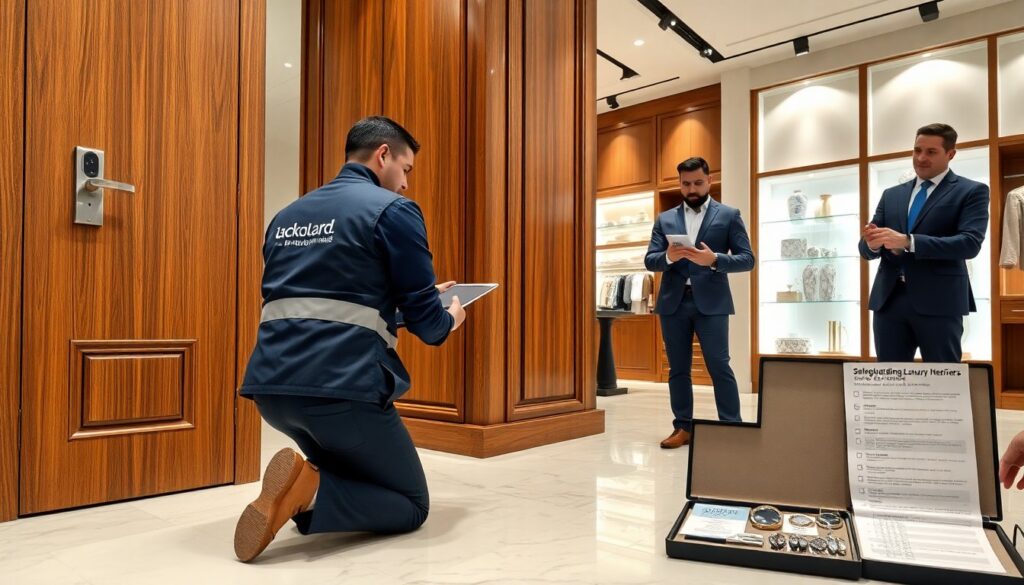
Luxury showrooms and boutique hotels need clear security plans. This article explains safeguarding luxury interiors business locksmith solutions and how they reduce theft, prevent damage, and protect brand value. It gives specific, practical measures that property managers and designers can use. The text stays direct and precise. It focuses on physical locks, access systems, and partner selection to keep premium spaces secure.
Key Takeaways
- Safeguarding luxury interiors business locksmith solutions address unique risks by combining custom hardware with precise installation to protect high-value finishes and prevent theft.
- Master key systems, restricted keyways, high-security cylinders, and access logs form core locksmith solutions that provide graded access, prevent unauthorized duplication, and enable auditing in luxury commercial spaces.
- Integrating smart electronic locks with concealed wiring and mechanical backups balances advanced access control needs without compromising luxury design aesthetics.
- Selecting a locksmith partner with verified experience in high-end projects, proper insurance, certifications, and maintenance plans ensures reliable safeguarding and ongoing security management.
- Regular audits, secure key registers, and disciplined key management reduce emergency risks and maintain both security and the premium appearance of luxury interiors.
Why Luxury Interiors Need Specialized Locksmith Protection
Luxury interiors face unique risks that standard locks do not address. High-value finishes and display pieces attract targeted theft. Staff and contractors need controlled access to prevent accidental damage. The phrase safeguarding luxury interiors business locksmith solutions captures both product and service needs for these spaces.
Luxury fit-outs often include custom doors, hidden storage, and integrated millwork. These elements require custom hardware and precise installation. A standard lock can damage a custom door. It can also leave a visible keyway that undermines design intent.
Managers must balance openness with control. Open rooms help sales and hospitality but they also allow broad movement. Locksmiths who work with high-end projects provide discreet hardware, limited keying systems, and audit-capable access. These measures reduce loss and protect customer trust.
Design teams value finishes and sightlines. Locksmiths who understand finish matching and concealed fittings protect aesthetic goals. Clients gain protection without a design trade-off. The market shows growing demand for safeguarding luxury interiors business locksmith solutions as brands invest in image and inventory protection.
Core Locksmith Solutions For High-End Commercial Spaces
High-end commercial spaces need layered locksmith solutions. Each layer reduces risk and makes recovery easier after an incident. The components below describe common, effective measures for upscale retail, galleries, and hospitality.
- Master key systems. They allow graded access for staff, cleaners, and managers. They reduce the number of keys in circulation and simplify rekeying when someone leaves.
- Restricted keyways. They prevent unauthorized duplication. Manufacturers track blanks and only release them to vetted locksmiths.
- High-security cylinders. They resist drilling and bumping. They also resist picking and keep the interior secure.
- Access logs. Electronic locks record who entered and when. Managers can audit movement for high-value zones.
These elements form the core of safeguarding luxury interiors business locksmith solutions. A project can combine mechanical and electronic options to meet budget and design needs. Firms often start with restricted keyways and then add electronic audit for vaults, stockrooms, and private client suites.
Integrating Smart Access Control Without Compromising Design
Design teams often resist visible electronics. Locksmiths can use compact readers and concealed wiring to reduce visual impact. They can mount readers inside cabinetry or behind decorative panels. They can run wiring in-wall to preserve sightlines.
Electronic locks provide timed access and temporary credentials for vendors. They also provide audit trails for high-value displays and private client suites. A property can use offline smart cylinders where wiring is impossible. These cylinders store events and sync to a central system when a technician connects a handheld device.
Security teams can combine mechanical backup with electronics. Mechanical keys provide emergency access. Electronics provide day-to-day control and logs. This dual approach supports resilience.
Large venues shape revenue strategy and security needs. Stadiums and arenas show how access links to commercial goals. Recent analysis of stadium business strategies highlights how venue upgrades tie to security and revenue improvements, which reinforces the case for investment in access control.stadium commercial strategies
Selecting And Managing A Trusted Locksmith Partner For Luxury Projects
Teams should vet locksmiths for experience with high-end finishes and commercial schedules. A short selection checklist helps project owners pick the right partner.
- Verify trade references. Ask for recent work at showrooms, hotels, or galleries.
- Confirm insurance and bonding. The contractor must carry liability and property coverage.
- Check certification. Look for credentials from major lock makers and access platforms.
- Review maintenance plans. The provider should offer SLA options and fast response.
- Require clear change orders. The locksmith should document finish changes and hardware substitutions.
After selection, teams must manage the relationship. They should schedule regular audits and keep a secure key register. They should limit the number of key holders and record every handover. They should plan replacement cycles for cylinders and electronic tokens.
A disciplined process reduces the need for emergency rekeying and cuts risk. It also keeps the finished look intact. Good partners deliver safeguarding luxury interiors business locksmith solutions while protecting design, operations, and brand value.