
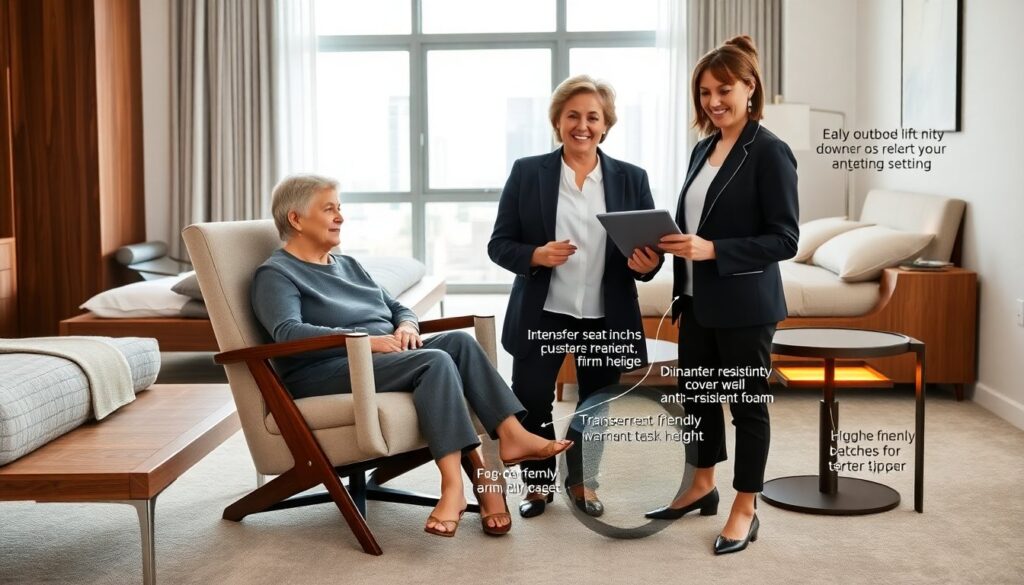
Senior-friendly luxury: furniture supports health concerns seniors luxury interiors is a design goal and a care strategy. Designers choose pieces that aid movement, reduce risk, and preserve dignity. Families invest in furniture that lowers pain, prevents falls, and fits a refined style. This article explains key health risks, useful furniture features, and practical material and layout choices.
Key Takeaways
- Furniture plays a crucial role in supporting health concerns for seniors by improving mobility, reducing fall risks, and enhancing comfort within luxury interiors.
- Designers integrate features like proper seat height, firm cushions, sturdy armrests, and adjustable seating to balance health needs with refined style.
- High-contrast edges and simplified layouts help seniors with sensory and cognitive declines navigate spaces safely and independently.
- Material choices like durable hardwood frames, antimicrobial finishes, and breathable fabrics contribute to long-term safety and hygiene.
- Careful layout planning with clear walking paths and appropriate flooring minimizes trip hazards and supports accessibility in senior-friendly luxury interiors.
- Investing in quality furniture with good maintenance and warranty support preserves safety, dignity, and the aesthetic appeal over time.
Key Health Concerns For Seniors And Why Furniture Matters
Seniors face mobility loss, balance decline, chronic pain, sensory decline, and cognitive change. Each condition raises risk of falls and injury. Furniture can reduce those risks. The phrase furniture supports health concerns seniors luxury interiors captures this link between design and care.
Mobility loss limits reach and transfer. Chairs with proper seat height make standing easier. Sofas with firmer seats and clear armrests support transfers. Beds with adjustable heights help caregivers and reduce strain.
Balance decline increases fall risk. Stable seating prevents tipping. Low, soft coffee tables create trip hazards. Rugs without anchors cause slips. A layout that gives clear walking paths reduces fall chances.
Chronic pain, especially back and hip pain, affects posture and sleep. Supportive mattresses and ergonomic chairs ease pressure points. Small changes in seat depth and lumbar support reduce pain during daily sitting.
Sensory decline changes lighting and contrast needs. High-contrast furniture edges help those with low vision find surfaces. Contrasting upholstery and floor colors improve object recognition and reduce collisions.
Cognitive change alters judgment and memory. Simple layouts and consistent furniture placement reduce confusion. Chairs with clear armrests cue safe rising and sitting. Overall, furniture supports health concerns seniors luxury interiors by translating clinical needs into visible, attractive solutions.
Furniture Features That Improve Mobility, Comfort, And Safety Without Sacrificing Style
Designers pick features that balance care and style. The goal remains clear: improve mobility, support comfort, and protect safety while keeping a refined look. This section lists practical features and how they fit a luxury interior.
Seat height and firmness. Chairs that measure 18 to 20 inches from floor allow safer standing. Firm cushions stabilize posture. Designers hide firmer cores under plush upholstery to keep style without losing function. The keyword furniture supports health concerns seniors luxury interiors fits here because high-end pieces can include these measures.
Armrests and grips. Wide, sturdy armrests help transfers. Some designers use sculpted wood or metal arms that match a room’s palette. The arms contrast visually with seats to cue safe use.
Adjustability. Recliners and lift chairs let users change position and reduce pressure. Lift chairs help users stand without strain. Many brands offer fabric and finish choices that match luxury interiors.
Stable bases and anti-tip design. Heavy, low bases reduce wobble. Built-in anti-tip brackets attach to floors or walls. These features remove danger without altering a room’s aesthetic.
Slip-resistant surfaces. Feet with rubber pads prevent sliding. Removable covers leave fabric choices open. Designers choose high-quality textiles that meet slip and stain standards.
Clear seat edges and contrast. High-contrast trim on cushions improves visual cues. This small change helps those with low vision. It keeps a polished look while adding safety.
Integrated lighting. Task lighting in side tables or under beds improves night movement. Designers choose dimmable, warm LEDs that match a luxury palette.
Storage and reach. Drawers and pull-out trays reduce bending. Storage at seated height keeps essentials within safe reach. These choices support daily independence and fit high-end furniture lines.
Upholstery and fabric selection. Stain-resistant and breathable fabrics reduce maintenance and support skin health. Designers choose textures that look rich and feel soft. The result shows that furniture supports health concerns seniors luxury interiors through material choice and thoughtful detail.
Note on lifestyle and health. Recent reporting highlights how sleep, movement, and sunlight affect health. The link to the idea of core drivers appears in wider health advice from experts on lifestyle and sleep core drivers of health. This fact supports the point that furniture must support daily habits, not only occasional use.
Materials, Layout, And Maintenance: Practical Choices For Long-Term Wellbeing
Materials, layout, and maintenance shape long-term wellbeing. Each choice changes safety, hygiene, and durability. The term furniture supports health concerns seniors luxury interiors applies when these three areas align.
Material selection. Woods, metal, and composite frames offer strength. Dense hardwoods resist wobble. Powder-coated metals resist rust. These frames give stable support for years.
Surface finishes. Smooth finishes clean easily. Antimicrobial finishes lower germ buildup on high-touch areas. Leather and high-grade vinyl resist spills and wipe clean.
Cushion fill and mattress types. High-resilience foam holds shape and supports joints. Zoned foam and pocket coils add targeted support. Removable covers allow washing and extend product life.
Color and contrast in layout. Designers place furniture against contrasting walls and floors. Contrast improves wayfinding. A clear contrast between seat and floor reduces missteps at night.
Walkway widths. Paths should allow a walker or wheelchair to pass. A minimum 36-inch path meets common accessibility guidance. Wider paths give extra margin for turns and carrying items.
Flooring choices. Low-pile carpet reduces trip risk while adding fall cushioning. Hard floors require rugs with non-slip backing. Ramps between levels should use gentle slopes and secure edges.
Maintenance and inspection. Caregivers should inspect joints, casters, and upholstery monthly. Tightening screws and replacing worn pads prevents failure. A maintenance plan extends life and preserves safety.
Service and warranties. Choose vendors who offer local service and clear warranties. Service options reduce downtime for repairs. Luxury retailers often provide white-glove delivery and installation that secures heavy pieces.
Budget and value. High-quality pieces cost more up front. They last longer and often reduce replacement and injury costs. Families should weigh initial cost against long-term safety and dignity.
In sum, materials, layout, and maintenance combine to ensure that furniture supports health concerns seniors luxury interiors in ways that last. The right choices keep seniors safer, more comfortable, and more independent.