
Quick Answer
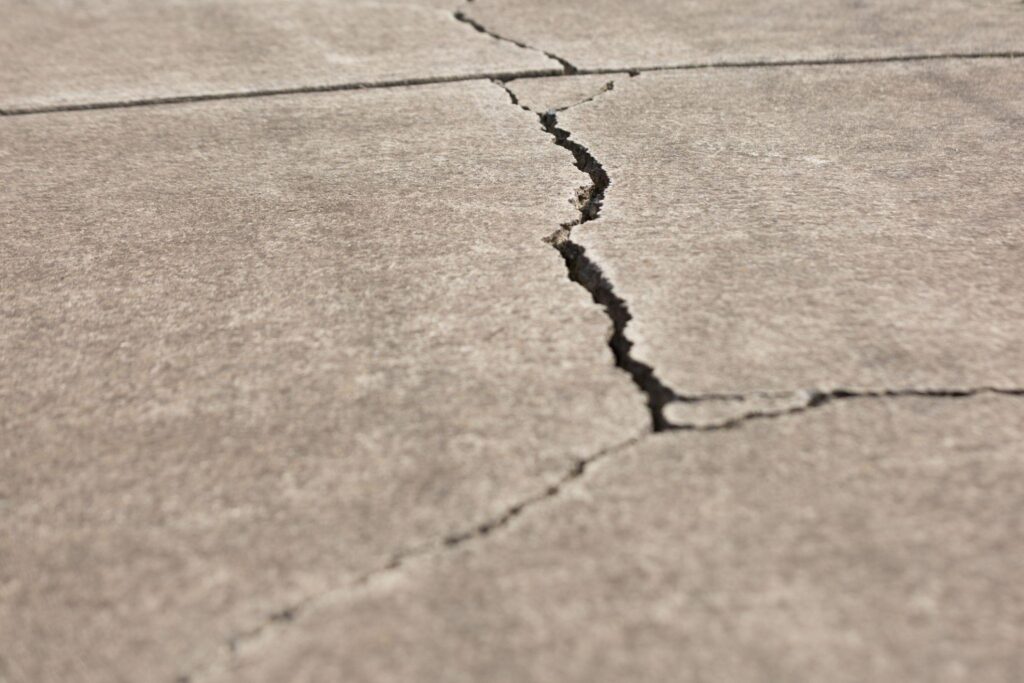
Cold-weather cycles are the leading cause of concrete freeze thaw damage across northern climates. Water seeps into tiny pores, expands roughly nine percent as it freezes, then thaws and repeats. Each cycle widens cracks and weakens the surface from within. Over several winters this internal stress flakes the top layer, undermines slabs, and quietly shortens the lifespan of driveways, walkways, and garage floors.
Introduction
Every property owner in a cold region has watched a solid slab turn patchy after a hard winter, often without understanding why. The concrete looked fine in autumn, yet by spring the surface felt rough, flaked at the edges, and showed hairline fractures spreading outward. It is the predictable result of moisture, temperature swings, and chemistry working against the material month after month, and concrete freeze thaw damage sits at the centre of the problem.
Understanding the mechanism is the first step toward stopping it. Professionals who install protective floor systems, such as Ultra Coating epoxy garage flooring in Calgary, design their surfaces specifically to resist the water intrusion and thermal stress that plague untreated slabs. The reality is that a strong defence depends on knowing exactly how the local climate attacks the pores, the reinforcement, and the finish over time.
The Hidden Mechanics of Cold-Weather Slab Failure
Concrete looks permanent, yet it behaves like a rigid sponge riddled with microscopic channels. Those channels fill with water from rain, melting snow, and ground moisture, which sets up the exact conditions a hard winter needs. When temperatures fall below freezing, the trapped moisture turns to ice and pushes outward against pore walls that cannot flex.
The Freeze and Thaw Cycle
Water expands by roughly nine percent as it crystallizes, and that expansion generates internal stress measured in megapascals. A single event rarely breaks a healthy slab, but the local climate delivers dozens of frost swings each season.
Each repetition drives fresh water deeper, refreezes it, and pries the internal structure apart a little further. Hydraulic and osmotic pressure work together in this process, forcing microscopic fractures to link into visible cracks over successive winters.
Surface Scaling and Structural Fatigue
The most visible outcome is concrete spalling, where the top layer flakes away and exposes the coarse aggregate beneath. This differs from a structural crack because it begins at the wearing surface and migrates downward. Untreated finishes speed the decline because they absorb moisture readily. Once the protective skin fails, water reaches the reinforcing steel and the damage compounds.
Common warning signs include:
- Fine hairline cracks forming a web across the surface
- Flaking or peeling that reveals gravel underneath
- Pitting and small craters near joints and edges
- A rough, dusty texture that was once smooth and sealed
The pattern is consistent across the region, and spotting it early gives an owner room to act before a full resurfacing becomes the only option.
Why De-Icing Salt and Saturation Do the Real Damage
Most coverage of cold-weather slab failure stops at the freeze and thaw explanation, yet two factors do the heavier lifting. The first is chemistry from road salt, and the second is a moisture threshold that decides whether frost causes harm at all.
The Salt Scaling Accelerant
De-icing products keep walkways safe, though they punish the material underneath. Chloride ions migrate into the pore network and draw in extra moisture, which raises internal saturation and sharpens osmotic pressure during each frost. The result is aggressive surface flaking that appears faster than plain frost action would produce.
Effective winter concrete protection, therefore, has to block chloride migration, not simply liquid water, because the salted brine attacks even slabs that looked sound in their first year. Salt scaling shows itself through a few tell-tale signs:
- Powdery white residue left after slush evaporates
- Broad, shallow flaking rather than deep cracking
- Faster wear near entrances and vehicle paths
The Critical Saturation Threshold
Building science points to a saturation level near ninety-one percent, above which frost damage becomes almost certain and below which it rarely occurs. This single detail explains why some slabs survive decades while neighbouring pours fail quickly. Garages face particular risk, since snow melts off vehicles and pools on the slab, and that standing water is a direct route to garage floor damage through repeated saturation.
The table below contrasts three common approaches to keeping moisture and salt out.
|
Protection Method |
Chloride Resistance |
Typical Lifespan |
Best Use Case |
|
Penetrating sealer |
Moderate |
2 to 5 years |
Exterior driveways |
|
Acrylic topical coat |
Low to moderate |
1 to 3 years |
Low-traffic patios |
|
Epoxy floor system |
High |
10 to 20 years |
Interior garages, workshops |
As the comparison shows, resistance and service life climb together, so a heavier upfront system usually earns its cost in a demanding climate.
Pro Tip: Rinse salted slush off interior slabs before it melts fully. Removing the brine early lowers pore saturation and starves the two mechanisms that drive rapid scaling.
Building a Defence Plan That Holds Through Spring
Protecting a slab is less about a single product and more about a sequence of decisions that starts before the first frost. Sound preparation, the right coating, and steady maintenance together decide whether a surface reaches its full service life or fails early.
Preparation and Moisture Management
Every durable finish begins with a dry, clean, and properly profiled substrate. Grinding or shot blasting opens the surface so a coating can bond mechanically rather than sitting on top as a fragile film. Drainage matters just as much, since water that pools against a slab keeps pore saturation high and defeats even a strong sealer. In practice, correcting the grade and sealing control joints removes the pathways moisture uses to reach the interior.
Choosing and Maintaining the Right System
Coating choice should match traffic, exposure, and the local climate rather than price alone. Beyond the basics, a simple seasonal routine prevents most premature failures:
- Sweep grit and rinse chloride residue after each thaw
- Reseal exterior surfaces on the manufacturer’s cycle
- Address hairline cracks early, before water widens them
- Schedule professional concrete repair the moment scaling appears
Catching minor flaking quickly is the difference between a small patch and a full resurfacing. The upshot is a slab that resists another decade of hard winters instead of degrading quietly beneath the surface.
Protecting Your Slab Through Every Season
Northern winters attack concrete through a mix of frost, moisture, and de-icing chemistry rather than cold alone. Recognizing the warning signs early, controlling saturation, and matching a durable coating to the exposure keeps a surface sound for decades. Preparation and steady upkeep matter far more than any single product choice.
Handled properly, the slow decay of concrete freeze thaw damage becomes a manageable maintenance task instead of an expensive seasonal surprise.