
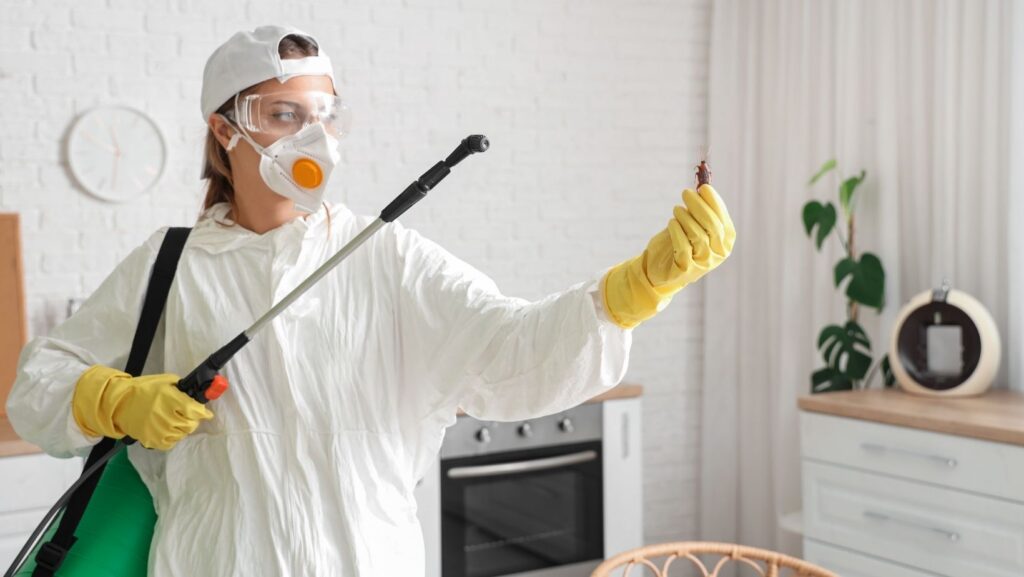
Chemical sprays used to be the default answer to almost any serious pest problem. Today, that’s no longer true—especially when it comes to bed bugs and other hard-to-shift infestations. Professional heat-based treatments have moved from specialist niche to frontline solution, and they’re reshaping how both homeowners and property professionals think about pest control.
So what changed, and why is heat suddenly at the centre of the conversation?
Why Heat, and Why Now?
The short version: biology finally caught up with us. Over decades of heavy insecticide use, many pests—bed bugs in particular—have developed significant resistance to commonly used chemicals. Studies across Europe and North America have repeatedly documented populations that survive standard doses of pyrethroids and neonicotinoids that once worked reliably.
When a pest can shrug off a treatment, technicians are forced into repeat visits, heavier chemical loading, or more complex product rotations. None of that is good for budgets, indoor environments, or reputation. Heat, by contrast, works on a completely different principle: rather than poisoning the insect, it overwhelms its ability to regulate temperature.
At sustained temperatures of around 50–60°C, bed bugs and their eggs are rapidly killed. They can’t “evolve” a workaround to basic physics in the way they can to a single active ingredient. That simple truth is why professional heat solutions have gained so much traction in settings where failure is not an option: hotels, student accommodation, social housing, and transport.
If you want to see how this looks in practice, you can view bed bug removal services offered by professional firms that specialise in heat-based treatments. The core ingredients are strikingly consistent: high-energy heaters, calibrated fans, and tight monitoring of temperatures in every part of the treated space.
How Professional Heat Treatments Actually Work
The idea of “just heating a room up” sounds deceptively simple, but professional execution is anything but. The art lies in raising the temperature enough, for long enough, in the right places, without damaging the structure or contents.
Whole-Structure vs Targeted Heat
Most professional services fall into two broad categories:
Whole-structure treatments
Here, technicians heat an entire room, apartment, or even a full house. Industrial heaters—electric or, in some cases, indirect-fired units—are positioned to deliver large volumes of warm air. Fans are used to eliminate cold spots and push heat into cracks, behind skirting boards, and inside furniture where pests typically hide.
The target is not just air temperature. Fabric, mattresses, wall voids, and clutter all need to reach lethal levels for a sustained period. For bed bugs, that often means holding 50–60°C for several hours.
Targeted or compartment treatments
Not every infestation calls for whole-room heating. In some cases, professionals use heat pods, chambers, or mobile “hot boxes” to treat specific items: luggage, soft furnishings, or equipment that can’t be easily sprayed.
This approach is especially useful where access is restricted, or where there’s a need to isolate and treat high-risk objects brought into a clean environment—think care homes, offices, or shelters.
Safety, Monitoring, and Verification
Modern heat-based pest control is driven by data. Technicians don’t rely on guesswork; they deploy a network of sensors and probes throughout the treated space, constantly monitoring:
- Air temperature at different heights
- Surface temperatures on key materials (mattresses, carpets, furniture)
- Time at target temperature, to ensure a sufficient lethal exposure
Many teams now use digital logging systems to document the entire treatment curve, which serves both as quality control and as evidence for property managers under pressure to demonstrate due diligence.
Fire safety and material protection are critical considerations too. Before any heat is applied, professionals will typically:
- Assess electrical capacity and fire detection systems
- Identify and remove heat-sensitive materials (candles, certain plastics, electronics where appropriate)
- Brief occupants on re-entry times and any ventilation requirements
Done correctly, the process is disruptive but short-lived. In many cases, occupants can return the same day once the structure has cooled.
Advantages (and Limits) of Heat vs Traditional Methods
Heat is not a silver bullet, but it does offer several compelling advantages over conventional chemical-heavy approaches.
Resistance, Residues, and Downtime
First, there’s the resistance issue. Because heat kills through temperature rather than toxicity, it neatly sidesteps the arms race between chemists and insect populations. That’s particularly important for bed bugs, whose resistance profiles are now notoriously diverse.
Second, heat leaves no chemical residues. For sensitive environments—homes with young children, healthcare settings, food premises—that’s a powerful benefit. There’s no need to worry about lingering active ingredients on surfaces, and fewer restrictions around re-entry.
Third, when done well, heat can be dramatically faster. Instead of multiple spray visits over several weeks, a single well-designed heat treatment can eliminate all life stages present on the day of service. That speed matters in sectors where every day of downtime or negative guest feedback carries a tangible cost.
That said, heat isn’t ideal for every situation. Large, poorly insulated structures can be difficult and expensive to bring to temperature. Some pests that move freely between units (such as certain rodents or cockroaches) may be better controlled with a mixed strategy combining proofing, sanitation, and targeted chemistry or trapping.
The most progressive pest management companies recognise this. They don’t treat heat as a replacement for everything else, but as a powerful tool within an integrated pest management (IPM) framework.
What This Shift Means for Property Managers and Homeowners
For anyone responsible for buildings—whether a single rental flat or an entire hotel portfolio—the rise of heat-based pest solutions changes both the risk profile and the decision-making process.
On the risk side, the bar for “acceptable response” is rising. Regulators, insurers, and residents are increasingly aware that non-chemical options exist, and may question reliance solely on repeated spraying where resistant populations are known to be present.
On the opportunity side, effective heat treatment offers a route to faster resolution and less disruption. If an infestation can be cleared in a day rather than over a month of follow-up visits, that has obvious operational and reputational advantages.
Questions to Ask a Heat-Treatment Provider
If you’re considering heat-based solutions, the quality of the provider matters more than the technology itself. A few targeted questions can tell you a lot about their professionalism:
- How do you monitor and log temperatures during treatment, and can I see an example report?
- What training and certification do your technicians have for using heat systems?
- How do you assess whether a property is suitable for whole-structure heat, and what alternatives do you offer if it isn’t?
- What preparation will I or my tenants need to do in advance?
- How do you minimise the risk of damage to fixtures, fittings, and sensitive items?
- What follow-up inspections or guarantees are included, and how do you handle repeat activity?
Professional, experienced providers will have clear, confident answers to these questions and should be comfortable walking you through case examples that resemble your property type.
Heat-based pest solutions are not just a new gadget in the technician’s van. They represent a fundamental shift toward approaches that are science-led, data-documented, and less reliant on ever-stronger chemistry. As resistance pressures mount and expectations around indoor environmental quality continue to rise, it’s hard to see that trend going anywhere but in one direction.