
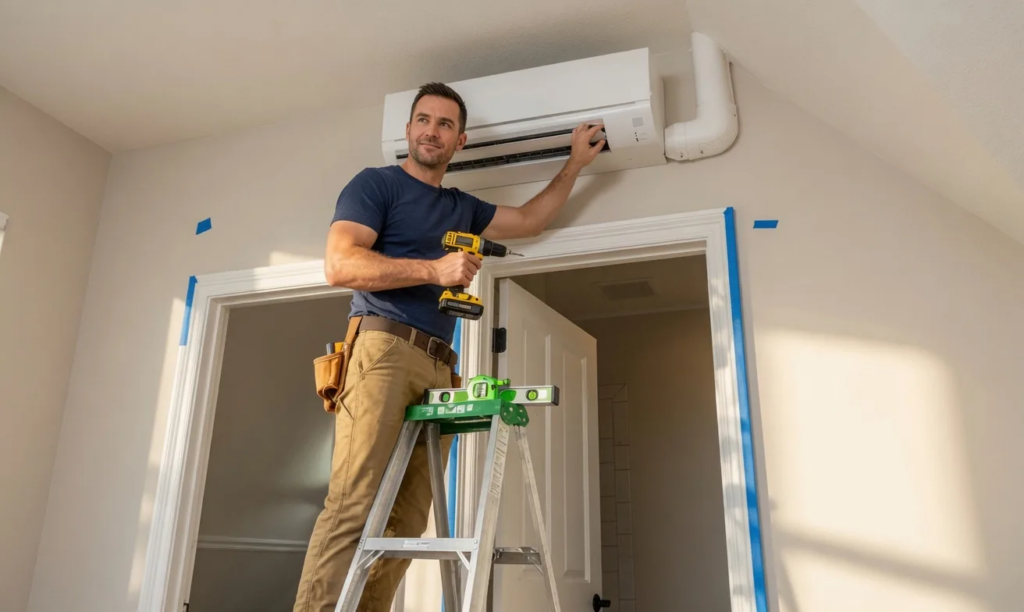
Choosing who actually performs a mini-split installation matters more than many homeowners initially realize, since the quality of the installation itself significantly affects how well the system performs, how much energy it actually uses, and how long it lasts before needing major repairs. Understanding what to actually look for in a contractor tends to matter more than simply comparing a few quotes and picking whichever number looks most attractive.
The lowest quote isn’t always the best value once installation quality gets factored into the actual comparison, since a poorly installed system can cost considerably more over its lifetime through higher energy bills, more frequent repairs, and a shortened overall lifespan than a properly installed system that costs somewhat more upfront. A general contractor can also help coordinate installation quality and ensure that the work follows the appropriate project requirements. Evaluating quotes alongside the specific qualifications and process each contractor describes tends to produce a more accurate comparison than focusing on price alone.
Why Licensing Verification Is the First Thing Worth Checking
Licensing and certification represent the most basic verification worth doing before hiring anyone for this kind of work, since HVAC installation involves electrical connections, refrigerant handling, and sometimes structural considerations that require specific training and legal certification to perform safely and correctly. Refrigerant handling in particular requires EPA certification under federal law, and a contractor unable to produce this certification when asked directly is worth treating as a significant red flag regardless of how competitive their pricing might otherwise look.
Verifying that a specific hvac contractor lees summit homeowners are considering actually holds current licensing and insurance, rather than simply taking a company’s own claims at face value, tends to matter more than people initially expect going into the hiring process. A quick check with the relevant state licensing board can confirm whether a specific license is actually active and in good standing, which takes only a few minutes but can reveal problems that wouldn’t necessarily show up in online reviews alone.
Why a Real Load Calculation Separates Careful Work From Guesswork
Load calculations represent one of the more technical aspects of a proper mini-split installation that separates a careful contractor from one cutting corners to save time. A correctly sized unit depends on more than square footage alone ceiling height, window area, insulation quality, and typical occupancy all factor into the specific BTU capacity a room actually needs, and a contractor who skips this calculation in favor of a rough size estimate risks installing a unit that’s either undersized and unable to keep up, or oversized and prone to inefficient short-cycling.
Manual J calculations, the industry-standard method for this kind of load assessment, take real time to perform correctly, which is part of why a contractor rushing through an estimate visit in a matter of minutes often hasn’t actually done this calculation at all, regardless of what final number they eventually present. Asking specifically whether a Manual J or equivalent calculation was performed, rather than accepting a size recommendation without any explanation of how it was reached, tends to reveal a meaningful difference in process quality.
Asking directly whether a contractor performs a formal load calculation, or simply eyeballs a room’s approximate size, tends to reveal a meaningful difference in how seriously a company approaches the technical side of an installation. A contractor confident enough in their process to walk through this calculation with a homeowner, explaining the specific factors that went into a size recommendation, generally demonstrates a level of technical rigor that a company offering only a rough size guess doesn’t.
Why Placement, Warranty Terms, and Permits Deserve Direct Questions
Placement planning for both the indoor and outdoor units affects a system’s efficiency and noise level considerably, and a contractor who takes time to discuss specific placement options where sunlight will hit the outdoor unit throughout the day, how airflow from the indoor unit will actually distribute through the room, whether the chosen wall location supports efficient line set routing tends to produce a considerably better result than one who defaults to whatever placement seems most convenient without discussing the tradeoffs involved.
Warranty terms differ meaningfully between contractors and between manufacturers, and understanding exactly what’s covered, for how long, and whether the warranty requires specific ongoing maintenance to remain valid matters considerably before any installation actually begins. Some manufacturer warranties require professional installation by a certified dealer specifically to remain valid, which means a homeowner attempting a lower-cost installation through an uncertified installer might unknowingly void coverage that would otherwise have protected a significant investment.
Registering a new system with the manufacturer promptly after installation also matters more than homeowners sometimes realize, since some manufacturers require this registration within a specific window after installation to activate extended warranty coverage beyond the standard base period. Missing this registration window can quietly reduce available coverage without the homeowner realizing it until a later repair need reveals the gap.
References and past project examples provide a more concrete basis for evaluating a contractor’s actual work quality than online reviews alone, since a contractor willing to share specific examples of similar mini-split installations, ideally with the ability to speak to a past customer directly, demonstrates a level of confidence in their own work that a company relying purely on generic marketing claims typically can’t match.
Reviewing photos of a contractor’s completed line-set covers and outdoor unit placement from past jobs can also reveal a lot about attention to detail, since a properly finished installation hides the refrigerant lines behind a clean cover rather than leaving them exposed and unprotected against the elements, and a carelessly finished job tends to signal similarly careless work in the less visible aspects of the installation that a homeowner can’t easily inspect themselves.
Permit requirements sometimes get overlooked by homeowners assuming a mini-split installation is minor enough to skip formal permitting, though local building codes often require permits for this kind of electrical and refrigerant work regardless of how straightforward the installation might seem. A reputable mini split ac installation lees summit contractor typically handles this permitting process as a standard part of the job, rather than leaving it to the homeowner to navigate or, worse, skipping it entirely in a way that could create problems later if the work ever needs to be verified for insurance or resale purposes.
Recognizing What Actually Separates a Good Contractor From a Risky One
None of these considerations guarantee a perfect installation experience, since even well-qualified contractors occasionally run into unexpected complications once a job actually begins. What tends to separate a genuinely qualified contractor from a risky one usually comes down to verified licensing and certification, a willingness to perform and explain a proper load calculation, and transparency about warranty terms and permitting requirements rather than treating any of these details as an afterthought.