
Roof pitch is the vertical rise over the horizontal run of your sheltering structure. It is the most critical metric for any roofing project today. For homeowners, understanding this angle provides the foundation for communicating with local contractors and planning for the building.
Pitch dictates which materials are viable for a long-lasting installation. Standard asphalt shingles require a specific minimum angle to shed water correctly. If the slope is too shallow, specialized membranes must be utilized to prevent moisture from seeping into the wooden roof decking.
If you need a quick answer, free online calculators make it easy to measure your roof pitch in seconds. But if you want to truly understand the basics — angles, ratios, and everything in between — keep reading as we cover everything you’d want to know.
The 12-Inch Rule and the Ratio System
The industry uses a twelve-inch rule to define the ratio system of a roof’s steepness. A pitch of 4:12 means the roof rises four inches for every foot it extends horizontally. These numbers are essential for calculating the total square footage of materials.
This ratio directly impacts how efficiently water runoff moves away from your residential structure. Steeper roofs allow rain and snow to slide off quickly, reducing the pressure on the shingles. Shallow slopes hold onto moisture longer, requiring a much higher standard of waterproof underlayment.
Understanding your ratio helps you identify the steepness category of your property. Low-slope roofs are generally considered anything below a 4:12 ratio. High-slope designs offer better drainage but require more labor to install. High standards in measurement lead to more stable and successful results.
The Interior Method for Attic Measurements
The interior method allows you to calculate the angle from the safety of the attic space. This approach is ideal for homeowners who want to avoid stepping on a ladder or the roof. It relies on the consistency of the internal wooden rafter.
Hold a standard carpenter’s level against the bottom edge of a rafter while maintaining a perfectly horizontal position. Measure exactly twelve inches along the level starting from the rafter’s edge. From that point, measure the vertical distance straight up to the wooden board.
This vertical measurement provides the rise part of your ratio. By staying inside, you eliminate the risks associated with height and slippery exterior surfaces. Professional precision is possible without any dangerous maneuvers. Reclaiming your property data starts with a commitment to these safe and simple facts.
The Exterior Method and Ladder Safety
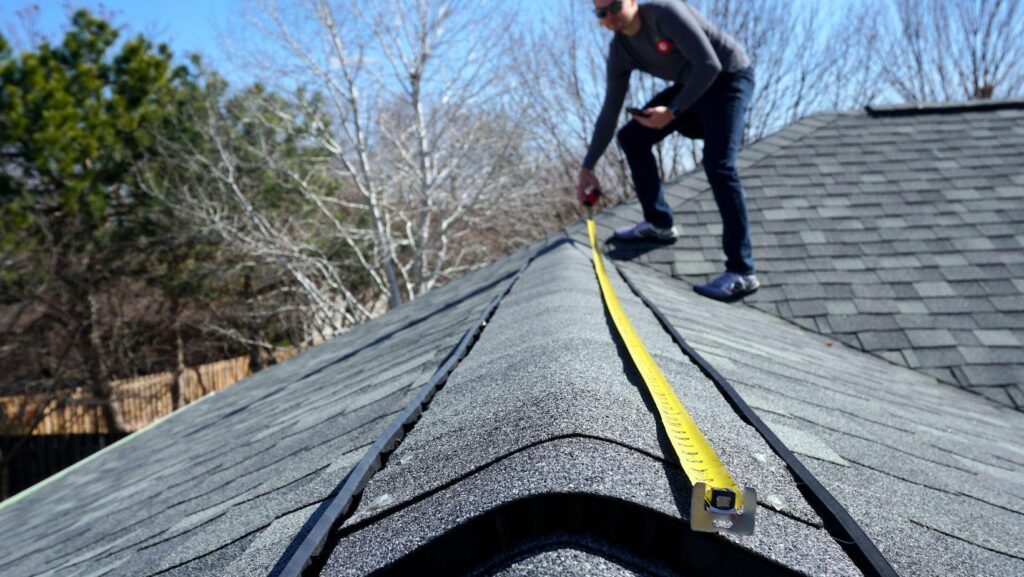
Measuring from the exterior requires a disciplined approach to ladder safety and weather conditions. You can take measurements directly from the roof surface or by checking the gable end of the house. This method is often the most direct way to get data.
Place the end of a level against the roof surface and extend it out horizontally. Measure twelve inches along the tool and then measure the vertical gap down to the shingles. Ensure the level is perfectly flat to avoid any errors in your calculation.
If you prefer to stay on the ground, use the gable end of the building for your check. Hold the level against the rake board and repeat the same rise-over-run calculation. High standards in safety ensure that your measurements are both successful and very professional.
Using Digital Tools and Smartphone Apps
Modern technology has introduced digital tools that simplify the process of determining a roof’s angle. Smartphone inclinometer apps use internal sensors to calculate the slope of any surface in seconds. These digital solutions are becoming a standard requirement for the tech-savvy professional homeowner.
To get an accurate reading, you must calibrate the app on a known flat surface before use. Place your device directly on the roof or a rafter to see the degree of the slope. Many apps automatically convert these degrees into the standard ratio.
Digital tools offer speed but still require a steady hand to be effective for the user. They are an excellent way to double-check your manual measurements for total consistency. High standards in technology lead to more stable and predictable results for your roofing mission.
Precision Data for a Successful Installation
Accurate pitch data is the foundation of a successful material order and a leak-free installation. Knowing your angle prevents the common mistake of buying shingles that aren’t rated for your specific slope. It ensures that every component of the system works in harmony.
Sharing this information with your contractor allows for a more precise and professional estimate of labor costs. It eliminates the guesswork that often leads to project delays or unexpected financial surprises. Proper preparation is the hallmark of a smart and successful residential owner.
Ultimately, the goal is to protect your home with a sheltering system designed for its geometry. By measuring the pitch correctly, you are ensuring the long-term stability and health of your property. Reclaiming your peace of mind starts with a commitment to the facts.