
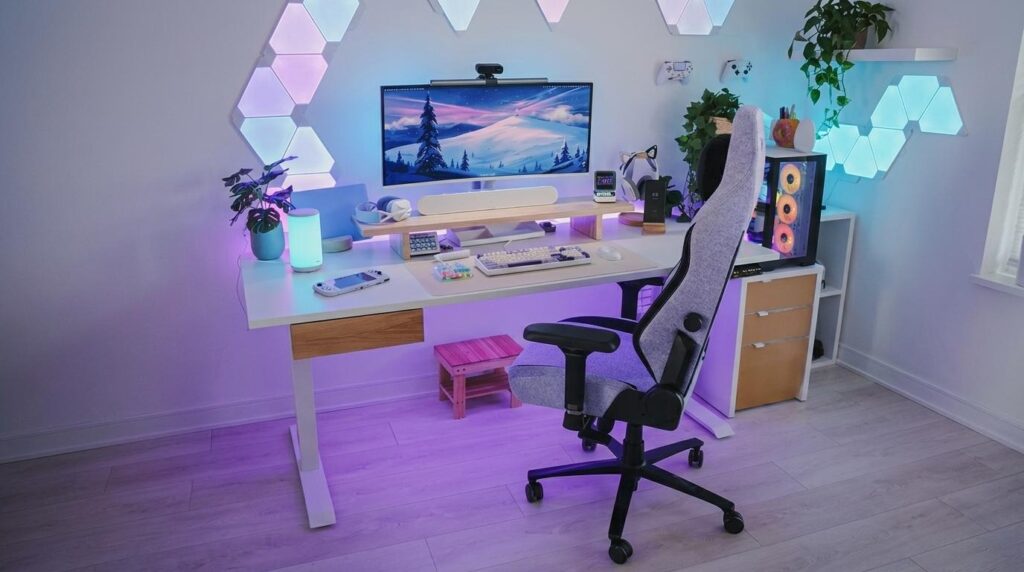
We compared the Desky Dual Standing Desk and the Burotic Aspire Laminate for shorter Canadian users, and Desky came out as the stronger pick for design-conscious home offices. Desky pairs a 23.6-inch minimum height with app controls, Siri voice commands, and cable management built into the frame, earning a “highly recommended” rating from TechRadar [1].
Most Canadian desks start at 28 to 30 inches, forcing anyone under 5’4″ into raised shoulders and bent wrists within minutes. Both Desky and Burotic solve the height problem, but they take very different paths. Here is how each stacks up.
Why Minimum Desk Height Matters More Than You Think
Standard desks create real problems for petite users. The CCOHS recommends adjusting your desk until forearms sit parallel to the floor with wrists straight [2]. For someone 5’2″, that means a surface near 24 inches, well below where most electric desks bottom out.
A CDC-backed study found sit-stand desks reduced upper back and neck pain by 54% over four weeks, but only when users could reach a proper position [3]. The minimum height setting is the most important spec for short users, and it is the one most brands overlook.
Desky vs Burotic Aspire: Side-by-Side Specs
| Feature | Desky Dual Standing Desk | Burotic Aspire Laminate |
| Height Range | 23.6″ – 49.2″ | ~23.4″ – 49.4″ (with top) |
| Weight Capacity | 140 kg (308 lbs) | 127 kg (280 lbs) |
| Motor Type | Dual motor | 3-stage dual motor |
| Controller | App + Siri/Google Assistant | 4-button handset with USB |
| Cable Management | Integrated channels + optional 9-outlet power board | Basic cable tray (included) |
| Smart Features | Mobile app, sit-stand reminders, usage tracking | None |
| Desktop Options | Melamine, bamboo, softwood, rubberwood, hardwood | Laminate (2 finishes) |
| Noise Level | ~40 dB | Not specified |
The Two Desks Compared
1. Desky Dual Standing Desk, Best Overall for Short Canadians
The Desky Dual Standing Desk drops to 23.6 inches, placing it in the usable range for Canadians under 5’4″ who need proper wrist alignment while seated. Its dual motors lift at 1.4 inches per second and run at roughly 40 dB, quiet enough for video calls and shared living spaces.
YouTube iframe code:
YouTube URL: https://www.youtube.com/watch?v=ym6DmFh5wcw
Desky’s dedicated mobile app connects via Bluetooth to save height presets, send sit-stand reminders, and track your daily movement habits. Siri and Google Assistant voice commands let you adjust the desk without pausing your workflow.
Cable routing runs through purpose-designed channels under the frame, and an optional integrated power board with up to nine outlets keeps cords entirely hidden, a detail featured on CNN’s list for best cable management solutions.
The desk ships with a melamine top by default, though the hardwood option is the bestseller and is priced competitively with other hardwood desks in Canada.
Pros:
- 23.6-inch minimum height suits users 5’0″ to 5’4″ without a footrest
- App and voice control with Siri, Google Assistant, and sit-stand reminders
- Integrated cable channels with an optional 9-outlet power board for a clean setup
- 140 kg capacity handles multi-monitor and PC setups without wobble
Cons:
- Voice control requires the app to maintain an active Bluetooth connection
- Premium desktop materials (hardwood, bamboo) cost extra
Best for: Short Canadians who want a smart, design-forward standing desk with serious cable management for a polished home office.
2. Burotic Aspire Laminate, Budget-Friendly Alternative
Burotic targets the Canadian market with the Aspire Laminate, a straightforward sit-stand desk that reaches approximately 23.4 inches with the top installed. The 3-stage dual-motor frame supports 280 lbs and includes anti-collision technology to protect your gear during height transitions.
The Aspire’s controller is a basic 4-button handset with memory presets and a built-in USB port. It works, but it feels dated next to app-driven alternatives, offering no voice control, no usage tracking, and no sit-stand reminders. Cable management is limited to a small included tray rather than integrated routing, so cords still need third-party solutions to stay hidden.
Pros:
- Low minimum height (~23.4″) suits petite users
- Anti-collision technology protects equipment
- Free cable tray and USB port included on the handset
Cons:
- Outdated controller with no app or voice integration
- Small cable tray leaves most cords exposed
- Only two laminate desktop finishes available
Best for: Budget-conscious Canadian buyers who want a functional sit-stand desk at a lower price point and do not need smart features or extensive desktop choices.
How to Pick the Right Desk for Your Height and Setup
Your ideal seated desk height falls roughly 1 to 2 inches below your elbow when arms hang relaxed [2]. For a 5’2″ user, that lands between 23 and 25 inches. Both desks reach this range, so the deciding factors become everything around the motor.
Total desktop load matters more than most buyers expect. Multi-monitor setups, a PC, and peripherals add up, and a higher weight capacity means less wobble at standing height. If your home office is visible on camera or part of an open living area, integrated cable routing saves hours of aftermarket fixes.
FAQs
How low should a standing desk go for someone under 5’4″?
A desk that reaches 23 to 24 inches accommodates most users under 5’4″ for proper seated ergonomics. Both the Desky (23.6″) and Burotic Aspire (~23.4″) fall within this range, making either a viable option on height alone.
Does a sit-stand desk actually help with back pain for petite users?
Research from the CDC’s Take-a-Stand Project found a 54% reduction in upper back and neck pain within four weeks of using a sit-stand desk [3]. The key is reaching the correct height in both positions, which is why minimum height matters so much for shorter individuals.
Is a dual motor better than a single motor for desk stability?
Dual motors distribute the lifting force evenly across both legs, reducing wobble at standing heights. Both Desky and Burotic use dual motor systems, though Desky’s higher 140 kg capacity gives it an advantage under heavier loads.
What makes Desky different from Burotic for short Canadian users?
Desky matches Burotic’s low height range but adds app control, Siri voice commands, integrated cable channels, and a wider choice of desktop materials. The Burotic Aspire keeps things simpler with a basic controller and a small cable tray, which suits buyers who prioritise price over smart features.
Can I control my Desky with Siri or a phone app?
Desky’s dual motor desks connect to a dedicated mobile app via Bluetooth, supporting Siri and Google Assistant voice commands. You can save height presets, set sit-stand reminders, and track your daily usage patterns directly from your phone.
The Bottom Line
The Desky Dual Standing Desk stands out as the top choice for short Canadians who want a desk that looks intentional and works intelligently, with integrated cable management, voice control, and a 140 kg frame built for serious setups. The Burotic Aspire holds its own on price and height range, though its dated controller and limited cable options leave room for improvement.
Start with the desk that matches both your height and your standards.