
When selecting a stone slab, most homeowners first focus on material and color, but the movement, veining, and overall pattern of a slab are just as influential on the finished look of a space. A slab’s pattern can determine whether a room feels calm and cohesive or bold and dramatic, and the same material in two separate patterns can produce drastically different results. Understanding how to choose the slab pattern that’s right for the intended application helps ensure the outcome lives up to expectations.
Kitchens: Balancing Flair with Function
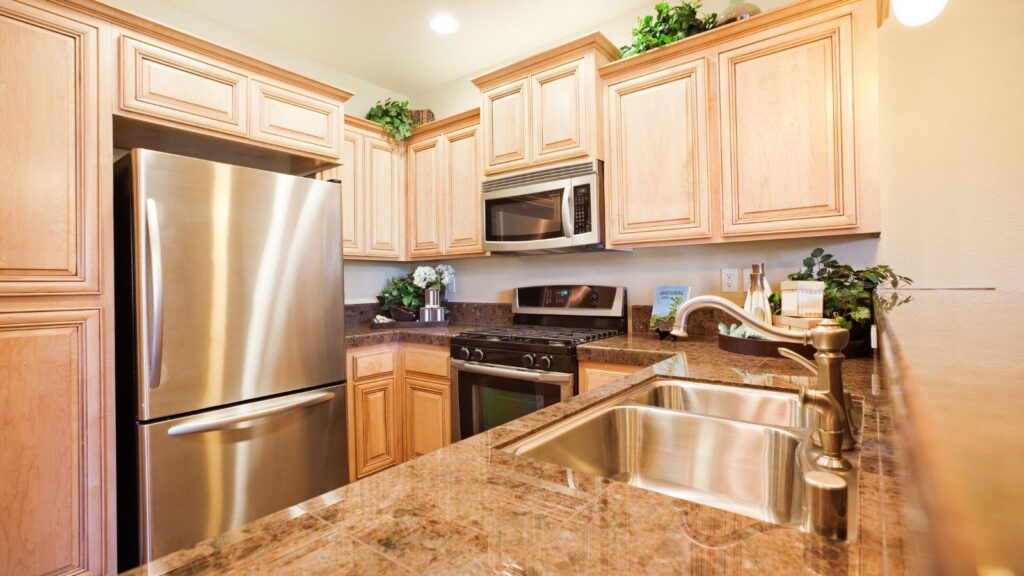
Kitchen countertops are high-visibility surfaces that endure heavy daily use. When choosing a slab pattern for a kitchen, consider how much visual activity you want in comparison to cabinetry, backsplash tiles, and hardware:
- Subtle, linear veining: This works well in busy kitchens with patterned backsplashes or bold cabinet colors. It helps ground the space without overwhelming it.
- Bold, sweeping movement: This type of pattern makes the most impact in kitchens with simple, neutral cabinetry and minimal backsplash detailing because the slab becomes the centerpiece.
- Bookmatching patterns: This is where two slabs are matched to perfectly mirror the veining, pattern, and color across an island, creating a symmetrical, high-end effect that elevates an otherwise neutral kitchen.
Waterfall edges that carry the slab down one or both sides of an island can magnify a pattern even further, so pay close attention to vein direction and continuity during slab selection. Exploring a range of natural stone and engineered slab options can help you find a pattern that suits your kitchen’s design.
Bathrooms: Scale and Proportion Are Everything
Bathrooms present a unique challenge because the surfaces are smaller and more varied, as vanity tops, shower walls, tub surrounds, and floors can all feature stone. Pattern scale becomes especially important here because large, dramatic veining that looks stunning on a massive kitchen island can feel chaotic when wrapped around a compact shower enclosure.
When selecting slabs for bathroom applications, consider how different patterns will read:
- Tight, consistent patterns: These give enclosed spaces like bathrooms a more refined and spa-like feel.
- Bold movement: It’s usually best to limit this to one focal surface such as a feature wall behind a freestanding tub.
- Matched patterning: Matching the slab across a vanity top and adjacent wall creates a seamless, luxurious look but requires careful planning before the slabs are cut to ensure vein continuity.
Feature Walls: Where the Pattern Takes Center Stage
A feature wall is where a slab pattern can truly shine. Whether it’s a living room accent wall, a fireplace surround, or a dramatic entryway statement, the pattern of the slab becomes the primary design element.
Highly veined marbles and quartzites tend to perform best for this application because the full slab face is visible and uninterrupted. Bookmatching two or four slabs across a large feature wall creates an almost art-like result, with the natural veining forming symmetrical compositions. When choosing slabs for a feature wall, it is critical to view the actual slabs (rather than just samples) since the pattern variations can be significant.
Seeing the Full Picture Before You Commit
Browsing a slab inventory with your specific application in mind makes the process more focused and productive, but remember that no stone sample or digital photo fully conveys how a slab’s pattern will look when viewed at scale. Visiting a slab gallery and seeing full slabs in person is always the most reliable way to assess movement, color variations, and overall impact, so you can choose the right slab pattern for your space.