
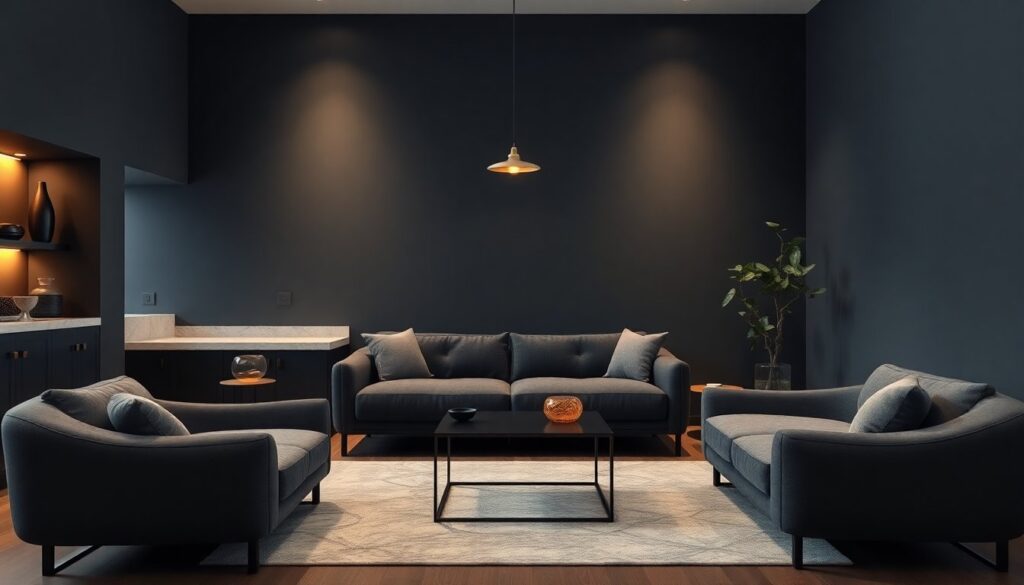
luxintdark gravityflow interior decoration style guide defines a dark, flowing minimal look. It mixes low light, curved forms, and weighted elements. The style favors deep tones, smooth surfaces, and deliberate negative space. It asks designers to balance heaviness with motion. This guide explains the core rules, materials, room layouts, lighting plans, and care tips for practical living.
Key Takeaways
- The luxintdark gravityflow interior decoration style embraces a moody minimalist look featuring deep tones, curved forms, and balanced visual weight to create flowing, calming spaces.
- Core principles include weight for grounding elements, flow to guide movement, and restraint to maintain simplicity, all reflected in materials like matte metals, honed stone, and dense fabrics.
- Room designs focus on anchored layouts with heavy focal points such as low sofas or platform beds complemented by curved furniture arrangements to enhance flow and comfort.
- Lighting in this style is layered with ambient, task, and accent sources using warm temperatures and dimmers to set a soothing mood and highlight key pieces.
- Maintenance involves gentle care routines like weekly dusting of matte surfaces, prompt textile cleaning, and seasonal conditioning of leather, ensuring lasting elegance and durability.
- Practical living tips recommend durable, easy-care fabrics, minimal sharp edges for family safety, and freestanding, non-invasive elements for renters to preserve the luxintdark gravityflow aesthetic.
What Is LuxintDark GravityFlow? Core Principles And Aesthetic
LuxintDark GravityFlow blends moody minimalism with fluid geometry. It centers on low‑contrast palettes, strategic weight, and implied motion. Designers place heavy pieces to ground a space. They add curved lines to guide sight and movement. The style emphasizes three core principles: weight, flow, and restraint. Weight means objects carry visual mass. Flow means shapes and lines lead the eye. Restraint means fewer objects with stronger presence.
The style borrows from industrial finishes and Japanese simplicity. It uses dark paints and matte metals. It pairs those with soft fabrics and subtle sheen. The style avoids busy patterns and excess ornament. It favors single bold accents instead. Practitioners treat negative space as a design element. They let shadow and form set the mood.
Designers sometimes draw a parallel between the style and the NBA “gravity” concept. The NBA explains gravity as defensive pressure that affects player movement, and the term helps explain how focal pieces pull attention in a room (intro to Gravity stat).
Key Materials, Colors, And Textures To Achieve The Look
Designers choose deep, muted colors as the base. Common choices include charcoal, deep olive, slate blue, and espresso. They add one warm accent like brass, rust, or amber glass. Surfaces stay mostly matte to maintain softness. Materials include honed stone, brushed metal, and raw wood. Fabrics favor dense weaves such as wool, heavy linen, and velvet.
Textures provide contrast without clutter. A matte plaster wall sits next to a low‑sheen oak shelf. A plush rug sits beneath a metal coffee table. Designers use tactile variety to create depth. They avoid glossy patterns and busy prints. They prefer monolithic color fields broken by one textured object.
Hardware and fixtures stay minimal in shape and bold in finish. Designers pick slim black or aged brass handles. They keep switchplates and vents unobtrusive. They integrate lighting hardware into architecture when possible. The result feels intentional and calm.
Room-By-Room Design Guide
Living spaces follow a balanced anchor-and-flow plan. Designers place one heavy anchor like a low sofa or sculptural fireplace. They arrange seating to curve gently around the anchor. They add a single standout light above the anchor to pull the eye.
Sleeping spaces focus on cocooning and weight. Designers place a low platform bed with dense bedding. They keep bedside tables minimal and symmetric or purposefully asymmetric. They use blackout drapes in deep tones to control light and mood.
Kitchens favor hidden storage and clean lines. Designers choose paneled appliances and underlit countertops. They use stone or matte composite for surfaces. They keep utensils and small appliances out of sight to preserve calm.
Work areas balance focus and comfort. Designers position desks near natural light when possible. They use curved screens or rounded desk edges to reduce visual tension. They place one statement shelving piece to show carefully chosen objects.
Room-Specific Layouts And Focal Points (Living Room, Bedroom, Kitchen, Home Office)
Living room layout: Place the sofa low and central. Angle chairs to create a soft flow. Use a single sculptural coffee table as the focal point. Keep media storage flush to the wall.
Bedroom layout: Set the bed against a textured head wall. Use matching lamps for balance or one pendant for focus. Keep circulation clear on both sides of the bed.
Kitchen layout: Align the island axis with the main entry. Reserve open shelf space for a curated set of objects. Hide clutter in deep drawers.
Home office layout: Place the desk to face the door or window. Position task lighting to reduce glare. Group storage vertically to free floor area. Each room uses one dominant shape and a few supportive pieces to keep the scheme coherent.
Practical Styling, Lighting, And Maintenance Tips For Everyday Living
Styling stays spare and purposeful. Designers choose three to five visible objects per major surface. They rotate objects seasonally to refresh the view. They keep plants minimal and sculptural, such as a single fiddle leaf fig or a cluster of succulents.
Lighting forms the mood. Designers layer light with ambient, task, and accent sources. They use dimmers to change scenes. They prefer warm color temperatures between 2700K and 3000K. They place uplights behind heavy pieces to create soft silhouettes.
Cleaning and care use simple routines. Designers dust matte finishes weekly with a microfiber cloth. They blot spills on textiles immediately. They condition leather twice a year and reapply seal to stone as recommended by manufacturers. They avoid harsh cleaners on painted or matte surfaces.
Practical tips for families: Choose durable fabrics for seating and add removable covers. Anchor rugs with non slip pads. Keep sharp‑edged furniture minimal and choose rounded forms for child areas. For renters: Use freestanding elements and temporary wall treatments that leave no mark.
Maintenance preserves the style. Regular care keeps dark surfaces rich and trim details tight. The style rewards modest upkeep with lasting atmosphere.