
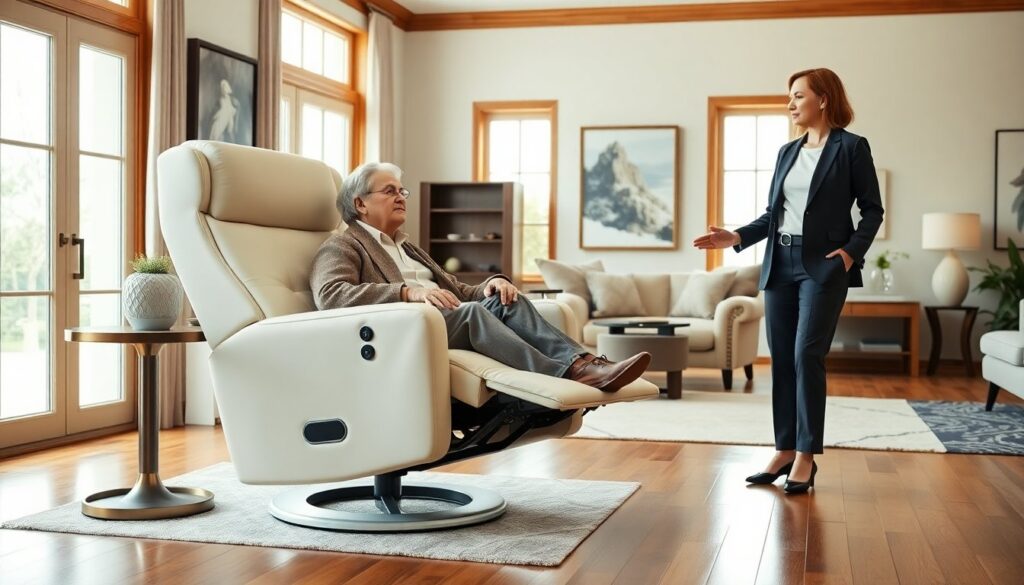
Innovative chairs elderly people luxury interiors provide safety and style in high-end homes. Designers focus on height, support, and easy transfers. Families choose pieces that reduce fall risk and match decor. This guide lists features, materials, and placement tips. It helps buyers pick chairs that blend comfort, safety, and luxury for older adults.
Key Takeaways
- Innovative chairs for elderly people in luxury interiors blend safety features like lift-assist motors and stable bases with elegant design to enhance comfort and style.
- Choosing elderly-friendly chairs involves testing seat height, armrest reach, and mobility-compatible recline to ensure ease of use and prevent falls.
- High-density foam padding, stain-resistant upholstery, and removable covers maintain both durability and upscale appearance in luxury home settings.
- Swivel and recliner chairs with quiet motors support independent living by facilitating easy transfers and comfortable posture adjustments.
- Proper placement on firm surfaces with adequate lighting and proximity to grab bars enhances safety and integrates chairs seamlessly into luxury interiors.
- Selecting chairs with local service, warranties, and accessible spare parts ensures long-term value and reliable maintenance for elderly users.
Why Thoughtful Chair Design Matters In Luxury Interiors For Older Adults
Designers specify innovative chairs elderly people luxury interiors to protect residents and preserve aesthetics. A well-designed chair supports the spine and eases standing. It prevents slips and reduces strain on joints. Caregivers value chairs that allow safe transfers and simple cleaning. Homeowners want chairs that match art, woodwork, and color palettes. A good chair balances function and style. It extends independent living and lowers injury risk. Buyers should test seat height, arm reach, and recline against the user’s mobility. They should measure walking paths and door clearances before purchase. Retailers often list weight ratings and lift-assist capabilities. Those details help families choose the right model.
Must-Have Features For Elderly-Friendly Luxury Chairs
A buyer should look for lift-assist motors that move the seat up and forward. Lift mechanisms reduce strain and make standing easier. Comfortable padding must use high-density foam that holds shape and supports posture. Wide, stable bases reduce tipping and enhance safety. Armrests must sit at a height that allows the hands to push off easily. Upholstery must resist stains and clean with mild soap and water. Removable covers simplify laundering. Controls should use large buttons with clear icons. Remote controls with memory presets help users return to favorite positions. Built-in sensors can stop motion if an obstacle appears. Adjustable headrests support the neck and reduce muscle fatigue. Wheels with locks let caregivers move chairs for cleaning and then secure them in place. Quiet motors preserve a calm atmosphere in luxury homes. A warranty and local service network ensure repairs happen quickly. Buyers should choose models with customer service in their region to avoid long downtimes.
Best Chair Types, Placement, And Selection Tips For Upscale Homes
A buyer should consider recliners with lift-assist for living rooms. These chairs let users recline and stand with less effort. Swivel chairs help users turn toward tables and guests without twisting the spine. Accent armchairs work well in bedrooms and libraries. Dining chairs should offer firm seats and clear arm clearance under tables. A family should place chairs away from cluttered corners and short rugs. Chairs must sit on firm, level surfaces to prevent rocking. Designers place chairs with a 16 to 18-inch seat height for most adults: installers adjust this to match the user’s lower leg length. A carpet pad under legs helps prevent slips on tile floors. Lighting should illuminate seating areas without glare. A placement near grab bars or a sturdy end table improves safety during transfers. Test the chair in the home before final delivery. A trial period lets the user confirm comfort and function. Measure doorways and elevators before purchase to ensure delivery. When scaling a room, designers balance chair size with other furniture so the space stays open and navigable. Sales teams should document measurements, weight limits, and service options in the sales contract. Buyers should schedule a professional fitting when mobility issues are significant. They should prioritize models with local servicing and spare-part availability to extend the product life.