
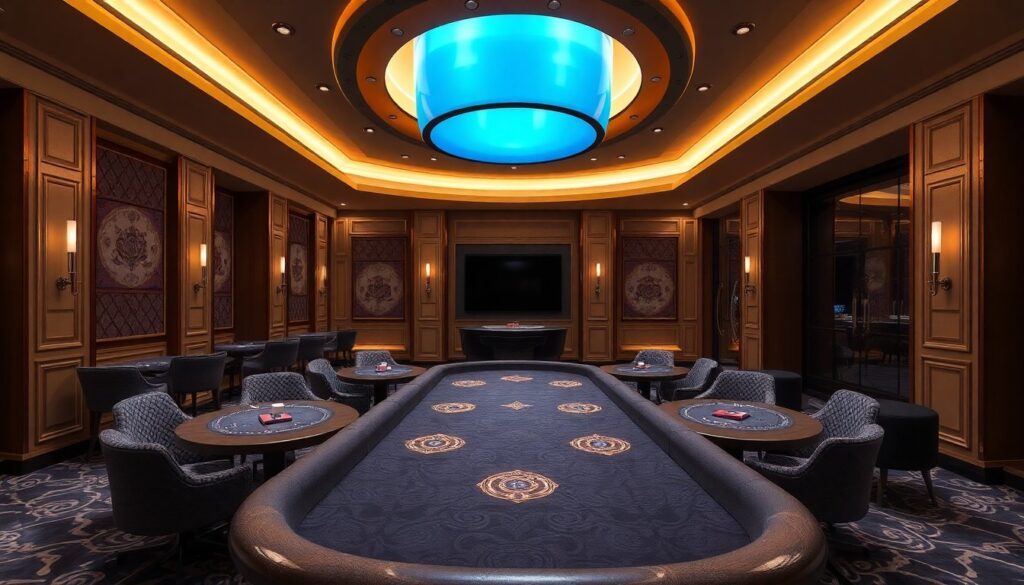
Luxuryinteriors unlike traditional casino games rely cards drives a different design brief for modern casinos. Designers shift priorities to sight lines, sight control, and table ergonomics. Owners expect premium finishes, smooth service flow, and clear security sightlines. Players expect comfort, quiet, and fast service. The article explains the key design moves that matter for card-only rooms in 2026.
Key Takeaways
- Luxuryinteriors unlike traditional casino games rely cards, requiring designers to prioritize sight lines, table ergonomics, and premium finishes for modern card rooms.
- Card-centric gaming spaces demand quiet, comfortable environments with carefully selected lighting, furnishings, and acoustic treatments to enhance long play sessions.
- Layouts focus on clear dealer visibility, spacious table spacing, and smooth traffic flow to support paced, social play and secure cash handling.
- Technology integration must remain discreet, supporting fairness and speed with tools like RFID chip readers and live streaming without disrupting the elegant design.
- Operations adjust service and security to maintain privacy, fast yet subtle service, and controlled access, creating exclusive and refined card-room experiences.
- Hybrid trends link physical card rooms with online play through streaming setups and digital management to meet evolving player expectations.
Why Card‑Centric Gaming Requires A Different Luxury Design Approach
Card-only play changes how rooms feel and work. Luxuryinteriors unlike traditional casino games rely cards, so designers avoid loud slot banks and bright signage. They place more value on table spacing. They use sight lines to let dealers and supervisors watch play without intruding on guests. They select chairs that support long sessions and boost posture. They choose fabrics that resist spills and show wear slowly. They pick lighting that reveals cards and faces while keeping glare low. They set traffic paths so servers move fast and players do not block dealers. They plan secure storage near tables for chips and cash. They add controlled entrances to protect privacy. They use acoustic treatment to cut background noise and keep play calm.
Operators adapt operations to the card focus. They train staff to read table mood and to offer paced service. They adjust shift patterns to match peak poker and baccarat times. They install discreet cameras that capture table play and hand movement. They adopt digital tools for chip tracking and card shuffles. They sync service touchpoints with table calls so players stay at the game. The shift matters for brand. Luxuryinteriors unlike traditional casino games rely cards and so brand cues move from spectacle to craft. The room must feel exclusive, refined, and private while still being part of the overall casino offer.
Key Design Elements For High‑End Card Rooms
Layout, Lighting, Furnishings, Materials, Acoustics, And Technology Integration
Layout
Designers set tables with clear dealer sight lines and comfortable spacing. They place aisles for quick service and secure cash flow. They use island tables for tournament play and semi-private bays for high-stakes sessions. They add staging areas for chip counts and secure drops. Luxuryinteriors unlike traditional casino games rely cards, so the layout focuses on slow, social play over fast, impulse bets.
Lighting
Designers use layered light. They add soft ambient light, task lights over tables, and low accent light for circulation. They avoid harsh overhead fixtures that cast shadows on cards. They install dimmers to change mood from day to night. They incorporate color temperature that keeps skin tones natural without washing out card detail.
Furnishings
Designers pick chairs with lumbar support and gentle swivel. They choose tables with integrated cup rests and chip trays. They add consoles for dealers that hide supplies but keep them within reach. They select service carts that glide quietly on padded casters.
Materials
Designers favor materials that clean well and age with grace. They choose high-grade leather, treated wool, and matte metals. They avoid glossy surfaces that reflect lights into players’ eyes. They pick carpets with low pile to cut noise and hide minor stains. Luxuryinteriors unlike traditional casino games rely cards, so finish quality must last under heavy use and look premium.
Acoustics
Designers add absorptive panels behind dealer stations and under seating canopies. They install soft ceiling clouds to cut reverberation. They place fabric wall panels at table perimeters to keep table talk readable and private. They test reverberation times to keep volume low without deadening the feel.
Technology Integration
Designers include discrete cameras, RFID chip readers, and dealer assist displays. They route wiring under raised floors and inside table bases. They add secure networked systems for live hand streaming and integrity checks. They plan for future upgrades so technology swaps do not disrupt the finish work. Luxuryinteriors unlike traditional casino games rely cards, so tech must aid fairness and speed while staying visually invisible.
Operational And Experience Considerations: Circulation, Service, Security, And Privacy
Circulation
Designers map staff routes to keep servers and security out of players’ sight lines. They place service corridors behind panels and use silent door hardware. They size paths to allow tray passage without crowding tables. They mark emergency exits clearly but keep them discrete.
Service
Operators train staff to offer unobtrusive help and fast drink turns. They stage service points near table clusters to cut server travel time. They use tokenless payment and mobile tabs to reduce cash handling. Luxuryinteriors unlike traditional casino games rely cards, so staff must keep games flowing without interrupting concentration.
Security
Designers integrate camera towers that focus on hands and chip stacks. They create secure count rooms close to play areas. They design blind spots out of the room and place one-way observation glass where privacy is required. They adopt access control for high-limit bays so only authorized guests enter. They use cash drops at table bases to cut open exposure.
Privacy
Designers add semi-private booths and sliding screens for VIPs. They use planting and low partitions to shape sight lines without closing off space. They provide private lounges for post-game conversation. They add sound masking to reduce overheard conversations. Luxuryinteriors unlike traditional casino games rely cards, so privacy becomes a selling point for high rollers and regulars.
Integration With Online Trends
Designers add streaming setups and discrete camera feeds for live play to mirror online offerings. They set up host stations that manage both in-room play and digital lobbies. They consult articles on how casino games moved from tables to screens when planning hybrid experiences and to align on player expectations. For tournament promotion, they link to event coverage and related content on the site.
Operational examples and resources
Operators can compare table-room rules with other game formats and player expectations. They can use internal guidance on scratch formats, the evolution of casino games, and player retention tactics to refine policies and training. These sources help teams match service and safety to design intent.