
Quick Answer
When your home stays warm, the cause is usually one of a few things: a thermostat set wrong, a clogged filter, a dirty outdoor unit, low refrigerant, or frozen coils. Some of these you can fix in minutes by swapping a filter or rinsing debris off the outdoor unit. Others involve refrigerant or wiring and need a trained technician. Begin with the simple checks and watch what happens from there.
Introduction
It’s the hottest afternoon of the year, the unit is humming away, and yet the rooms feel like a sauna. Air conditioning not cooling the house is one of the more frustrating problems a homeowner runs into, usually at the worst possible moment.
Here’s the part that helps: a warm house often points to a small, fixable cause rather than a broken system or a big repair bill. Plenty of cooling problems come down to something you can spot in a few minutes. Others run deeper and call for a licensed pro. Knowing the difference saves you time, money, and a lot of sweating. A practical air conditioning checklist can help you sort the quick wins from the real trouble before you pick up the phone.
This guide walks through the most frequent reasons your AC blows warm air, what you can safely handle yourself, and the warning signs that mean it’s time for a professional.
Why Your Cooling System Is Blowing Warm Air
Several issues can keep your system from cooling, and they range from a two-minute fix to a service call. Working through them in order helps you rule out the easy stuff first. Here are the usual suspects behind weak or warm airflow.
Thermostat Set the Wrong Way
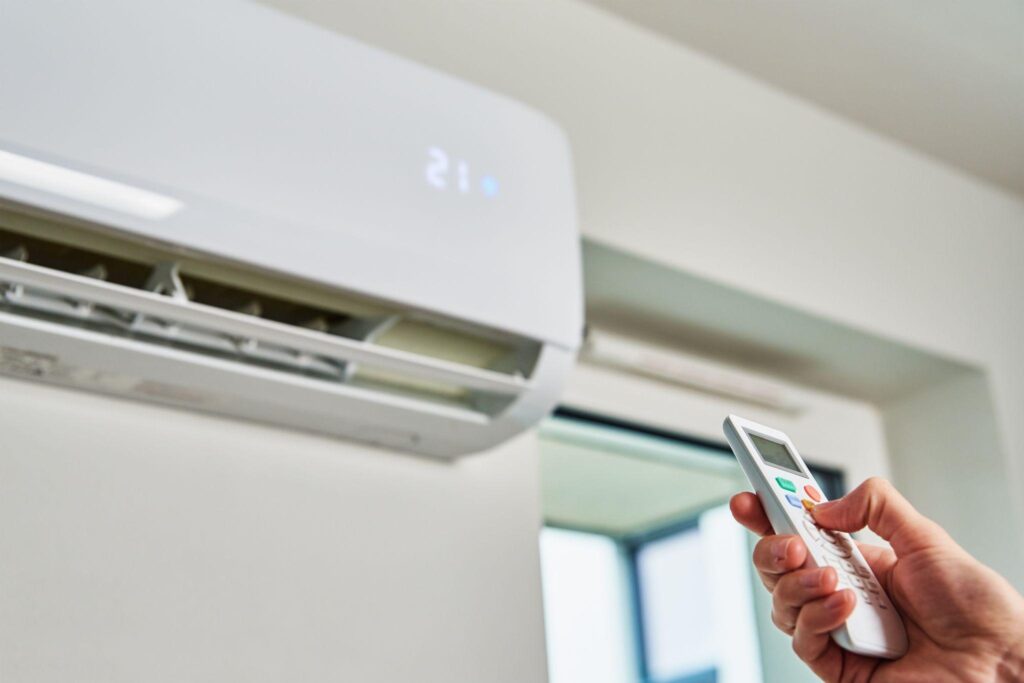
The simplest cause is also the most overlooked. If the fan is switched to “on” instead of “auto,” the blower runs around the clock, pushing room-temperature air through the vents even when the system isn’t actively cooling. Set the mode to “cool” and the fan to “auto,” then drop the target a few degrees below the current room reading and wait for the unit to kick in.
A Clogged Air Filter Choking Airflow
A dirty filter is the leading reason a home stops cooling well. Dust builds up, airflow drops, and the whole system strains to push cool air through. Left too long, a choked filter can even freeze the indoor coil. Check yours monthly during peak season and replace it when it looks grey or caked. This one habit prevents a surprising share of service calls.
A Dirty or Blocked Outdoor Unit
The outdoor condenser dumps heat from your home into the outside air. When grass clippings, leaves, or shrubs crowd the fins, it can’t release that heat, and your rooms stay warm. Keep at least 60 cm of clear space around the cabinet and gently rinse the fins with a garden hose on a low setting. Never blast it on high, or you’ll bend the delicate metal.
Low Refrigerant and Hidden Leaks
Refrigerant is the fluid that absorbs warmth from your indoor air. Levels are sealed and shouldn’t drop, so if they do, you almost certainly have a leak. Warning signs include longer run times, hissing near the lines, ice on the copper tubing, and a rising hydro bill. This one isn’t a do-it-yourself job. Handling refrigerant requires certification, so a technician must trace the leak and recharge the system.
A Frozen Evaporator Coil
When airflow is starved, or refrigerant runs low, the indoor coil can turn into a block of ice that blocks cool air entirely. Switch the system to fan-only and let the ice melt fully before running it again. If the coil keeps freezing after you’ve replaced the filter, an underlying problem needs a closer look.
Leaky Ductwork Losing Cool Air
Cool air can escape long before it reaches your rooms. Gaps in the ducting running through an attic or basement leak conditioned air into spaces you’re not trying to cool. A telltale sign is strong airflow from some vents and almost none from others. Sealing exposed joints in an unfinished basement is doable. Hidden leaks inside walls are best left to a pro.
Knowing Where the Line Sits
Some tasks are safe for any homeowner. Others carry real risk. This quick split keeps you on the right side of it:
|
You can handle |
Leave it to a technician |
|
Adjusting thermostat settings |
Refrigerant leaks and recharging |
|
Swapping the air filter |
Compressor or capacitor failure |
|
Rinsing the outdoor unit |
Electrical wiring and tripped breakers that reset |
|
Sealing exposed duct joints |
Coils that freeze repeatedly |
Once you’ve matched your symptom to a likely cause, the next move depends on whether a simple fix solved it or the warm air is still hanging on.
When to Call an HVAC Technician
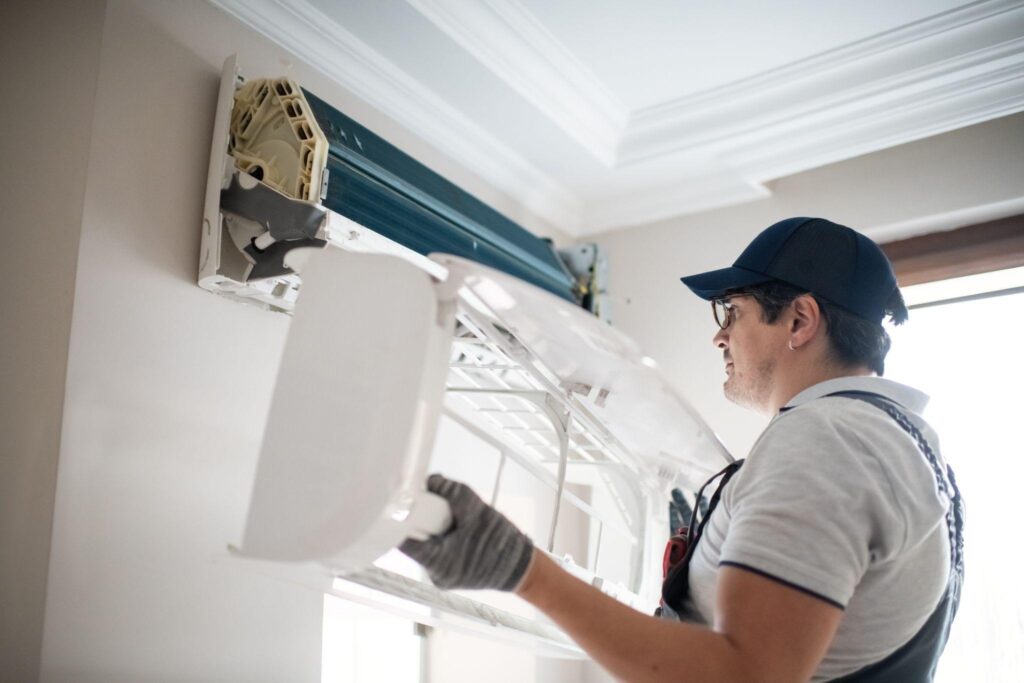
You’ve checked the thermostat, changed the filter, and cleared the outdoor unit, yet the house still won’t cool. At this point, you’re likely past the homeowner zone and into territory that needs trained hands. The trick is reading the signs early, before a small fault grows into a failed compressor or an emergency call to Tiptop Plumbing & Heating during a heat wave.
Watch for these red flags that point to a deeper problem:
- Warm air keeps blowing after every basic check has been done
- A breaker for the outdoor unit trips, and trips again once you reset it
- Hissing, grinding, or banging sounds coming from either unit
- Ice forming on the coil or copper lines more than once
- Run times that stretch on and on while hydro bills climb
A breaker that trips a second time is your cue to stop. Resetting it again risks an electrical fault, so one always goes to a technician. The same caution applies to anything sealed inside the system, where pressurized lines and high-voltage parts sit well beyond what a tutorial can safely guide you through.
Why the Age of Your AC Matters
Sometimes nothing is broken at all. You’re simply hitting the limits of an aging system. According to ENERGY STAR, a unit older than 10 to 15 years is worth replacing, since efficiency fades and a tired compressor struggles on the hottest days. If yours predates the last decade and repairs keep stacking up, a fresh installation often costs less over time than pouring money into patch jobs.
Getting the Most From a Service Call
A little prep makes any service visit faster and cheaper. Note when the trouble started, what the airflow feels like at different vents, and any odd sounds or smells. Mention the steps you’ve already tried so the technician can skip the basics and zero in on the real fault. Booking a seasonal tune-up before summer also catches small faults early, sparing you a breakdown on the worst possible day.
With the warning signs and timing in mind, the last piece is pulling it all together into a clear plan of action.
Keeping Your Home Cool All Season
A warm house on a hot day is frustrating, but it rarely means the worst. More often than not, the fix is as simple as switching the fan to “auto,” sliding in a clean filter, or clearing the leaves crowding your outdoor unit. Run through those quick checks first, and you’ll solve a fair share of cooling troubles in minutes without spending a cent.
When the warm air lingers, that’s your signal to bring in a licensed technician. Sealed refrigerant lines, electrical faults, and a struggling compressor all call for proper tools and training, whether the answer turns out to be a straightforward AC repair or a full AC installation on a system that’s run its course. Knowing where your limits end keeps you safe and protects the equipment.
A clean filter, a clear outdoor unit, and a yearly tune-up before the heat arrives will carry you a long way. A little upkeep now means steady, reliable cooling when you need it most